A maioria de nós come flores o tempo todo, sem perceber. Brócolis, couve-flor e alcachofra são flores ou botões de flores.
Claramente, a parte da planta que muitas vezes consideramos valiosa apenas pela sua aparência também pode ser incrivelmente saborosa.
É por isso que você não deve descartar suas plantas mais ornamentais. Um número chocante deles é muito mais do que apenas rostos bonitos.
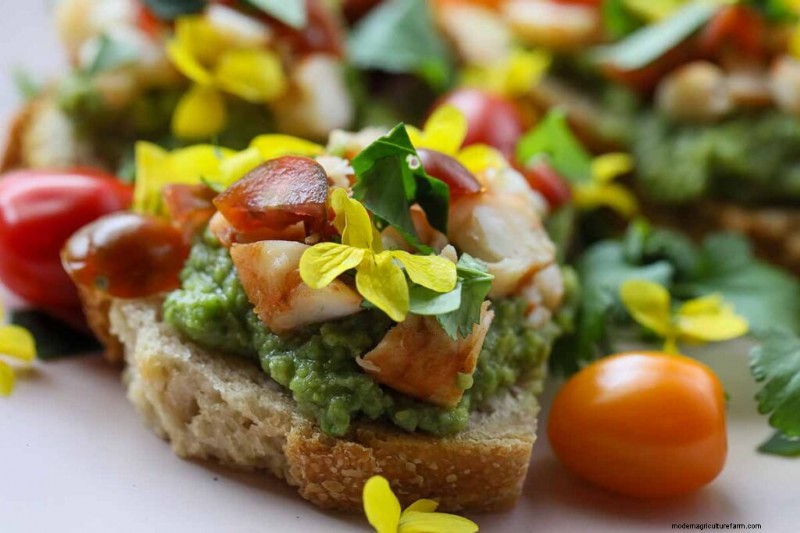
Foto de Kristine Lofgren.
Nós criamos links para fornecedores para ajudá-lo a encontrar produtos relevantes. Se você comprar em um de nossos links, podemos ganhar uma comissão . As begônias têm um toque cítrico fresco e os cravos são tão doces quanto possível. Os lírios têm gosto de ervilha e mel, e as gardênias são deliciosas demais para serem desperdiçadas em buquês.
Ao longo da história, comer certas espécies de flores entrou e saiu de moda.
Algumas plantas que usamos para embelezar nossos quintais hoje eram mais valorizadas como comestíveis. E não estamos falando apenas de violetas cristalizadas em um cupcake.
As flores podem ser usadas em qualquer prato que você imaginar.
Se você deseja que suas plantas tenham uma função dupla ou algo novo para colocar no prato, este guia apresentará dezenas de flores que você pode não apenas comer, mas muitas que são tão saborosas que você pode acabar plantando-as ao lado de seus vegetais em vez de em seus canteiros ornamentais.
Aqui estão as variedades que discutiremos:
A maioria das flores de ervas são comestíveis –
estragão ,
tomilho ,
orégano ,
sábio , e similares – mas a menos que sejam particularmente únicos ou tenham um sabor distinto do das folhas, deixamos estes fora da lista.
Sinta-se à vontade para comê-los sempre que estiverem presentes – a maioria deles terá um sabor muito semelhante ao das folhas.
O mesmo vale para plantas da família Brassicaceae. As mostardas, em particular, produzem pepitas de flores saborosas.
Além disso, você deve evitar lavar as flores até estar pronto para comê-las, salvo indicação em contrário. Praticamente todos os tipos de flores devem ser consumidos frescos.
Se você usá-los em pratos quentes, espere para adicioná-los até o final do cozimento ou antes de servir. Avisaremos você quando esse não for o caso.
Se você estiver colhendo no jardim ou forrageando, certifique-se de que as flores colhidas não tenham sido pulverizadas com produtos químicos recentemente.
Ou, se você decidir correr até um viveiro para comprar um pacote de seis plantas para usar em um jantar, faça isso com antecedência para que você possa
desembarcar as flores existentes e deixe crescer novos que você possa colher e servir com segurança.
Observe que algumas pessoas descobrem que têm uma alergia que não conheciam quando experimentam novos alimentos.
Por exemplo, consumir daylilies pode causar uma reação alérgica em algumas pessoas. Experimente dar uma mordidinha em qualquer espécie nova que você experimentar e depois espere algumas horas antes de mergulhar de cabeça.
1. Acácia
Você provavelmente já viu flores de acácia (
Acacia dealbata , também conhecida como árvore mimosa) penduradas em cachos de árvores ou em feixes de floristas.
Onde quer que você tenha visto flores distintas e difusas, provavelmente não imaginou colocá-las na boca.
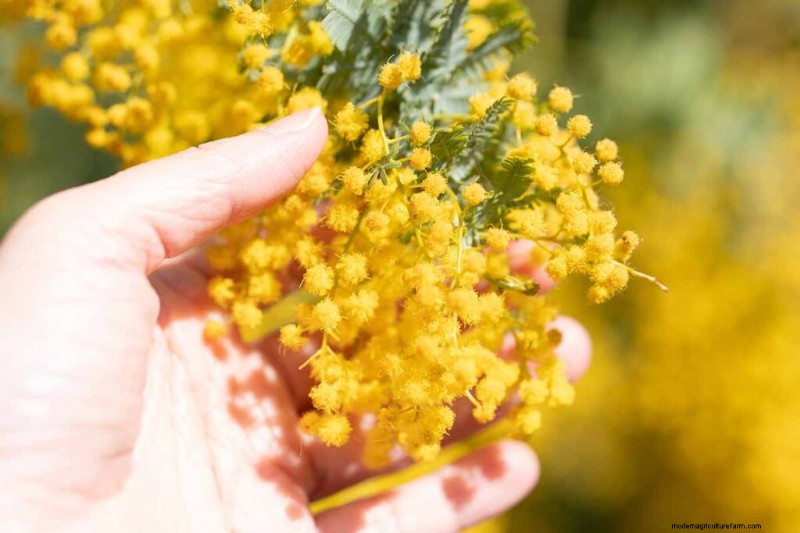
Você deveria, no entanto. Thomas Jefferson disse uma vez que a mimosa era “o arbusto com flores mais deliciosas do mundo” e a única planta além da laranja que ele se daria ao trabalho de cultivar em sua estufa.
Tem sabor floral, doce de mel e resiste ao cozimento.
Na verdade, é assim que a maioria das pessoas os usa, já que as partes difusas podem ser um pouco estranhas de mastigar.
Gosto deles picados ou amassados para diminuir a pelugem, mas acho que o sabor fica melhor cru.
A propósito, não coma os que encontrar em uma exposição de flores, a menos que você tenha 100% de certeza de que são
Acacia dealbata .
Outros membros deste gênero podem ser tóxicos. Você também deve ter certeza de que as flores não foram pulverizadas com produtos químicos.
Em outras palavras, provavelmente é melhor limitar-se àqueles que você retira de uma árvore e que pode identificar positivamente.
2. Alio
Todas as flores no
Allium gênero são comestíveis, mas nem todos têm um sabor delicioso.
Na hora de escolher uma flor com toque de alho ou cebola sem muito amargor, opte pela
cebolinha e
alho-poró .
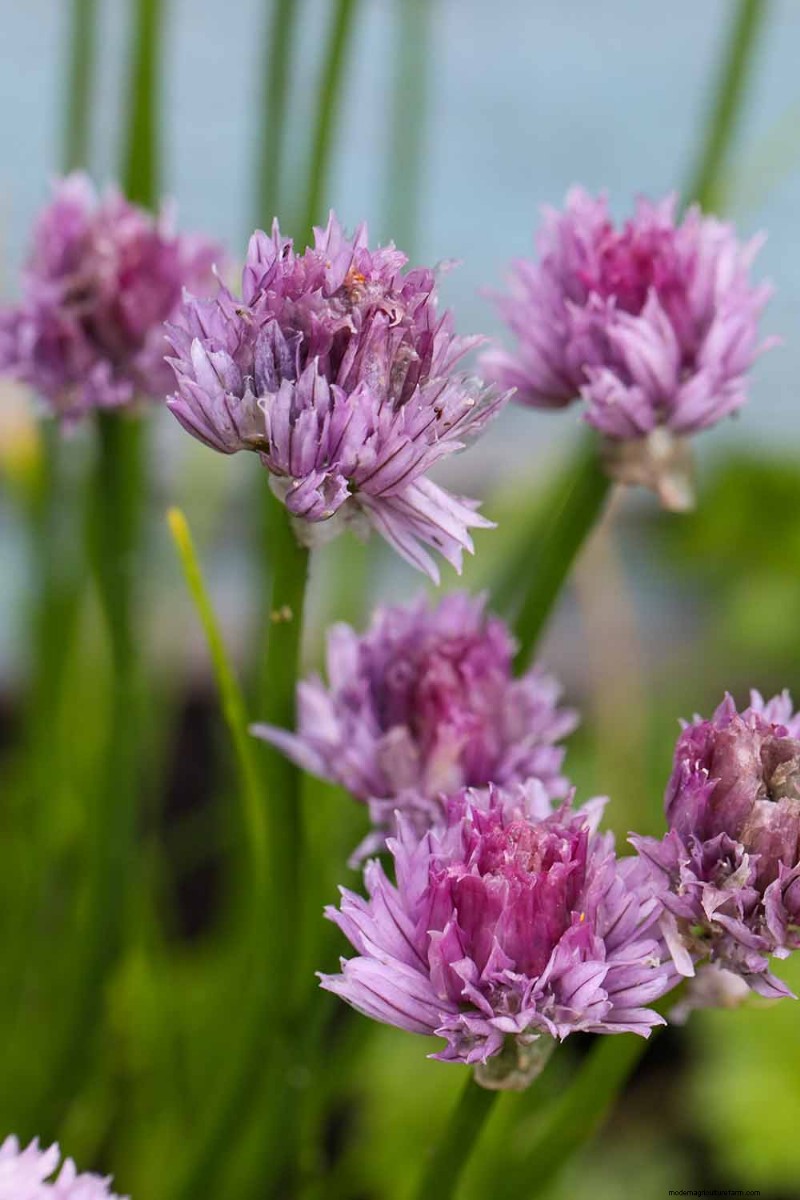
Foto de Kristine Lofgren.
Alho ,
cebola e
allium ornamental as flores podem ser um belo complemento para um prato, mas tendem a ser um pouco amargas ou duras. Nem todos eles são, entretanto, então experimente!
Use esses tesouros roxos, rosa ou brancos para cobrir queijo cottage, molhos à base de creme de leite, sopa, arroz ou omeletes, ou um sanduíche de camarão - em qualquer lugar que você queira apenas um toque de sabor de cebola.
3. Anis Hissopo
As flores do hissopo de erva-doce (
Agastache foeniculum ) tem um sabor muito parecido com o das folhas, com um sabor doce, semelhante ao alcaçuz, com apenas um toque floral.
Em qualquer lugar onde você usar as folhas de ervas, você pode substituí-las pelas flores ou adicioná-las em saladas, sopas, massas ou pratos de arroz.
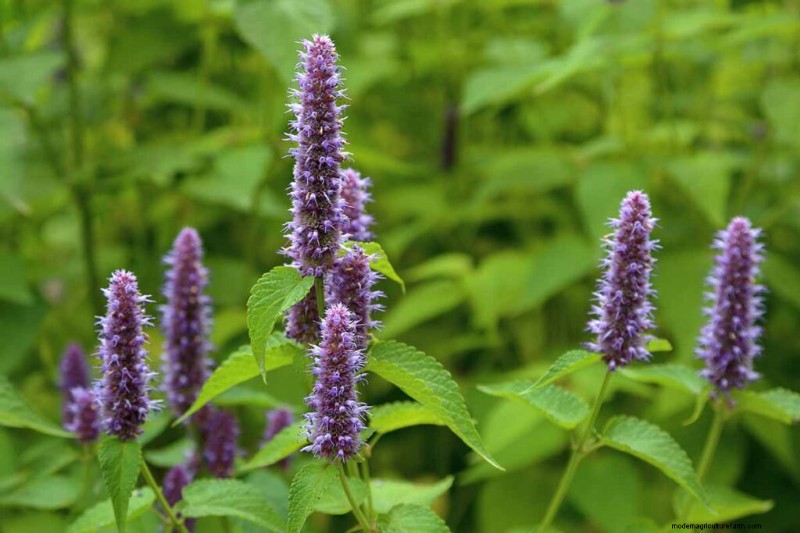
Se você não sabe exatamente como usá-los, pense em como usaria o
alecrim ou hortelã.
Cordeiro, carne bovina, frango, salada, sopas, macarrão, arroz - você escolhe e provavelmente descobrirá uma maneira de colocar hissopo de erva-doce nele.
Embora você possa comer a flor inteira se cortá-la finamente, é melhor retirar as flores individuais da cabeça difusa antes de comer.
Aprenda
como cultivar flores de hissopo de erva-doce em nosso guia.
4. Botão de bacharelado
Para um toque de pepino e muita cor, adicione botões de solteiro (
Centaurea cyanus ) na salada ou como guarnição de sobremesa.
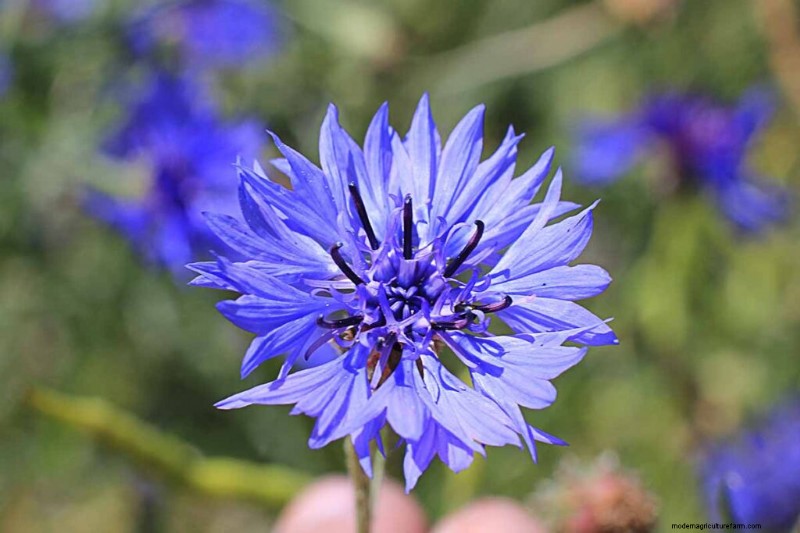
O azul cobalto das centáureas torna-as tão marcantes no jardim quanto na cozinha.
Coloque-os em cima de um prato de massa para impressionar seus convidados ou asse-os em bolos e biscoitos para dar um toque de cor natural.
O sabor tem um pouco de doçura picante que funciona bem tanto em sobremesas quanto em pratos salgados.
Confira
nosso guia para cultivar botões de solteiro para adicionar essas flores ao seu jardim.
5. Bálsamo de Abelha
Bergamota selvagem (
Monarda didyma ) também conhecido como bálsamo de abelha, tem sabor mentolado, levemente adocicado, semelhante ao orégano. Na culinária, a cor vibrante se destaca tanto quanto o sabor.
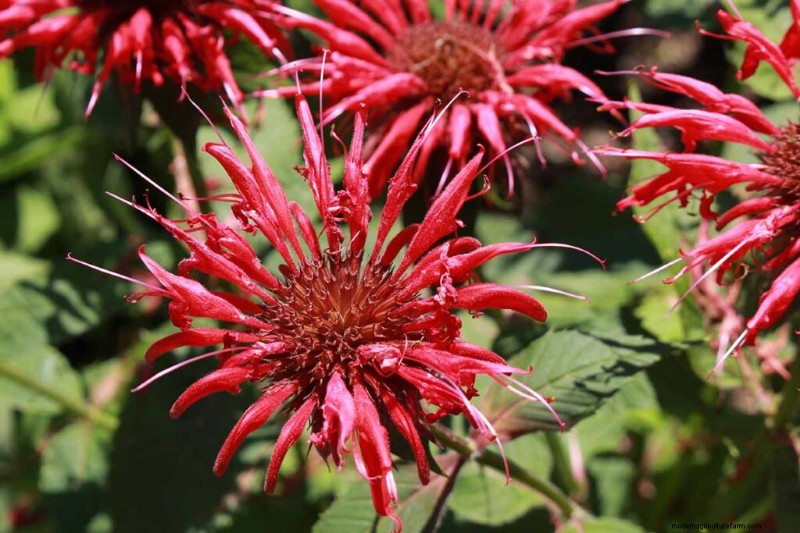
Apenas certifique-se de arrancar as pétalas do cálice. Você pode comer o cálice se cozinhá-lo e cortá-lo finamente, mas se quiser algo parecido com uma erva, fique com as pétalas.
O bálsamo de abelha é um complemento particularmente bom para salsa – junto com um ácido como suco de limão, ervas frescas como coentro ou salsa e tomate – mas também é excelente em chá, pão, geléia, biscoitos e coquetéis.
Aprenda
como cultivar bálsamo de abelha em nosso guia .
6. Begônia
Em locais sombreados ao redor do mundo, você pode encontrar vários membros da
Begônia gênero florescendo.
Mas embora sejam fabulosos para iluminar manchas escuras, muitas pessoas não percebem que também são ingredientes culinários versáteis.
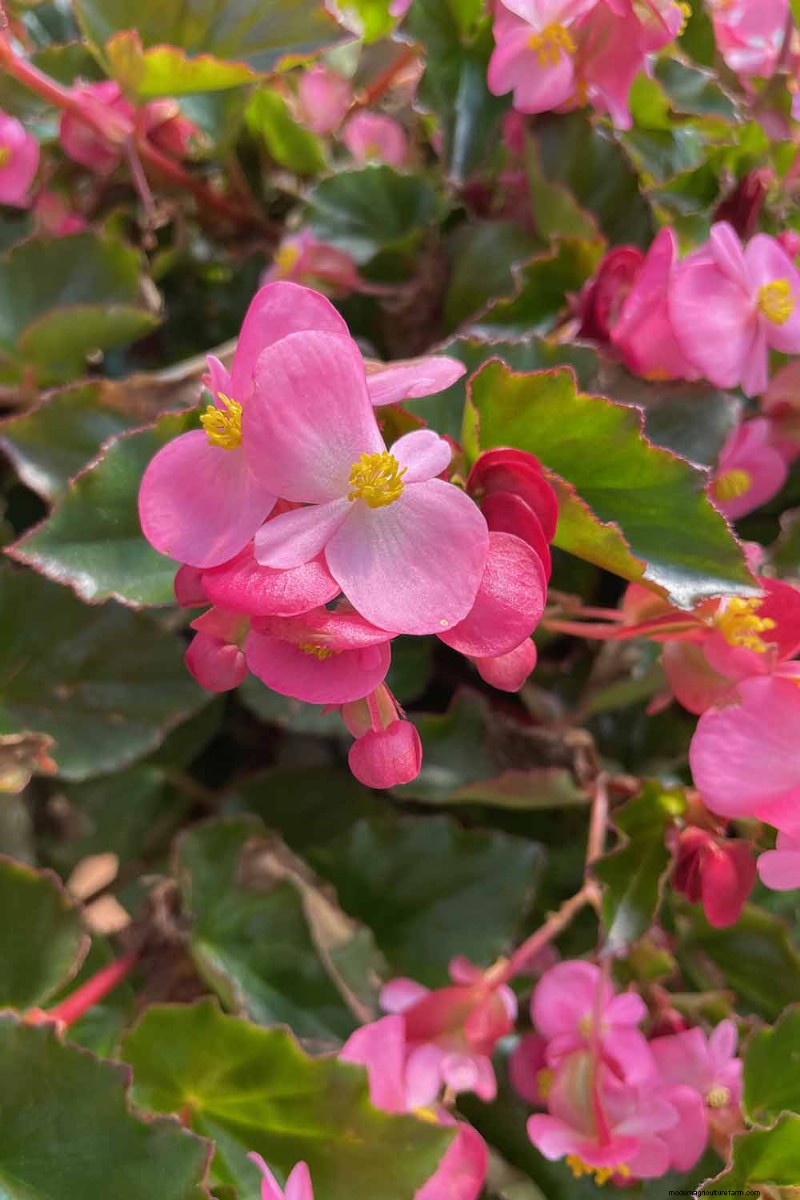
Foto de Kristine Lofgren.
Todas as begônias são comestíveis, mas
cera (B. x semperflorens ) e
begônias tuberosas (B. x tuberhybrida ) são os mais saborosos.
As pétalas suculentas têm uma crocância de pepino e um leve sabor cítrico, o que as torna lindas em saladas de vegetais e peixes. Experimente-os picados em panzanella e você se converterá.
Não tem uma receita certa? comece com esta panzanella de rabanete do
nosso site irmão, Foodal .
7. Bagas
As frutas vermelhas são uma excelente escolha se você estiver procurando flores comestíveis.
Todos os
Rubus e
costelas espécies, bem como
morangos (
Fragaria spp
. ),
mirtilos (
Vaccinium spp.) e
amoreiras (
Morus alba ) têm flores comestíveis.
Framboesa ,
amoras , groselhas pretas,
groselhas – todos valem a pena provar!
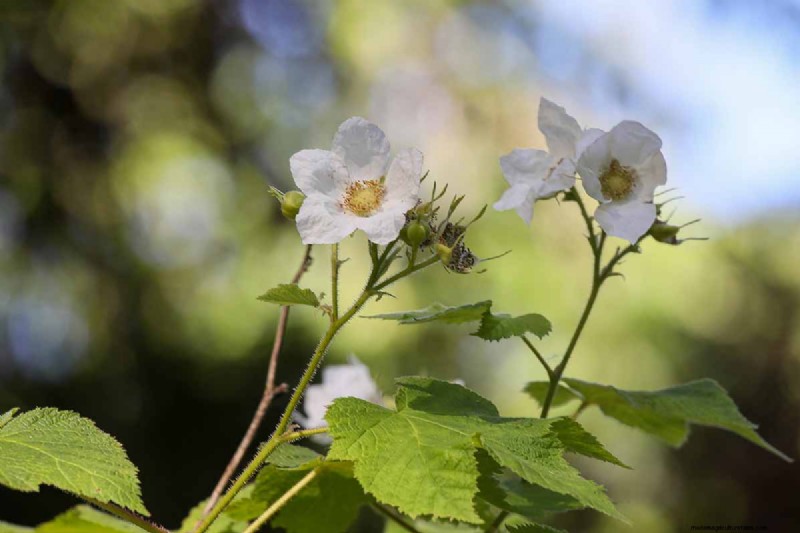
Uma flor de salmonberry,
Rubus spectabilis . Foto de Kristine Lofgren.
Lembre-se que se você arrancar as flores não se formará nenhum fruto naquele local.
As flores simples são saborosas, mas nada se comparam às frutas em si, então equilibre sua fome por flores com sua fome por frutas e não escolha demais!
Por outro lado, se o seu quintal estiver infestado de
silvas , você tem muitas guloseimas florais esperando para serem colhidas.
8. Borragem
Borragem (
Borago officinalis ) não exige basicamente nenhum esforço para crescer e as flores azuis celestiais em forma de estrela são tão saborosas quanto lindas.
Com sabor que lembra pepino doce, dão um toque especial a saladas, sopas, pratos de peixe ou bebidas.
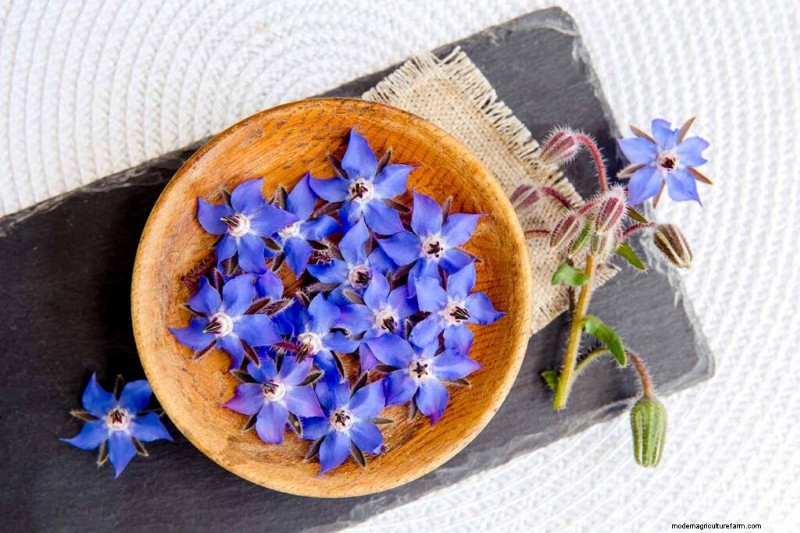
Misture-os com tomate e pepino em um vinagrete ou use-os como guarnição na limonada para um deleite de verão.
A borragem é uma das melhores flores culinárias e, ainda por cima, uma das poucas azuis.
Se você não usar todos os seus imediatamente após colhê-los, embrulhe-os frouxamente em uma toalha de papel úmida e coloque-os na geladeira.
Aprenda
como plantar e cultivar borragem aqui .
9. Buganvílias
Com suas vinhas grossas e flores vivas, as buganvílias (
Bougainvillea spp.) ganhou um lugar de glória em muitos jardins.
As chamadas “flores” são na verdade brácteas, que são folhas modificadas e coloridas. Esta é a parte comestível. Jogue fora as flores pequenas e estreitas presas ao centro de cada bráctea.
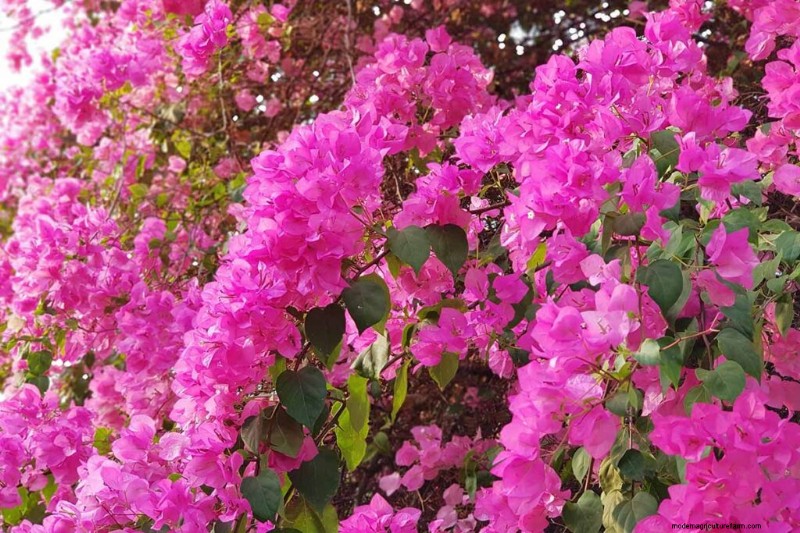
As brácteas são melhor usadas frescas, embora você também possa colocá-las em chá, mas não as deixe na água quente por mais de cinco minutos ou mais.
Eles perdem o sabor doce e começam a ficar extremamente amargos.
Uma água fresca caseira feita com água fria, suco de limão, açúcar e brácteas de buganvílias é particularmente saborosa.
Saiba mais sobre o cultivo de buganvílias com nosso guia .
10. Calêndula
Calêndula (
Calêndula spp.) são bem conhecidas por seus usos ornamentais e medicinais, e temos até um
guia para orientá-lo no uso delas para fins medicinais .
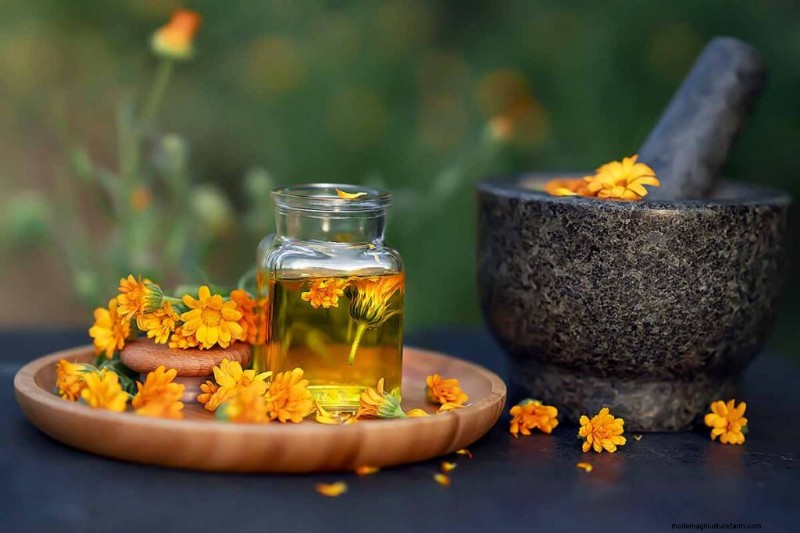
Também conhecidos como malmequeres, assim como outros tipos de malmequeres (
Tagetes spp.), você pode usá-los para colorir pratos como faria com o açafrão, com um lindo tom laranja.
No entanto, essas flores não têm o sabor distinto do açafrão.
Use calêndula para infundir óleos e manteiga ou em pratos de peixe como saladas e paella. Ou asse em uma fornada de biscoitos amanteigados ou scones enriquecidos com flores.
Você pode aprender
como cultivar calêndula em nosso guia .
11. Camélia
Camélias (
Camélia spp.) são vistosas e doces, o que as torna ideais como guarnição de sobremesas ou saladas de frutas.
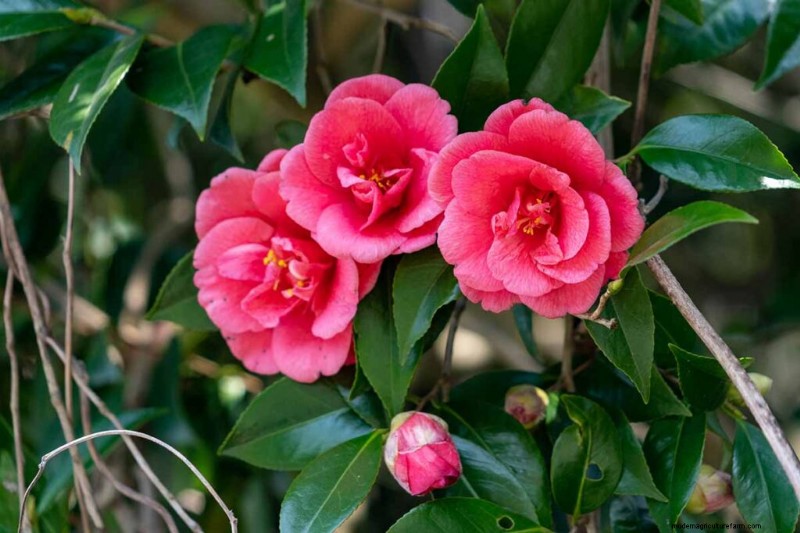
Você também pode confeitar as pétalas para colocar em bolos, biscoitos, doces e outros doces. Você pode aprender como fazer flores cristalizadas em
nosso site irmão, Foodal .
Aprenda
como cultivar flores de camélia em nosso guia .
12. Cravos
Aqui estamos nós saboreando nosso pequeno e feliz cravo de melhoras (
Dianthus caryophyllus ) buquês e depois jogá-los no lixo, quando poderíamos estar comendo-os o tempo todo.
Bem, talvez não, se aquele buquê veio do supermercado ou da floricultura e não podemos saber ao certo se as flores foram tratadas com produtos químicos. Mas você entende o sentimento.
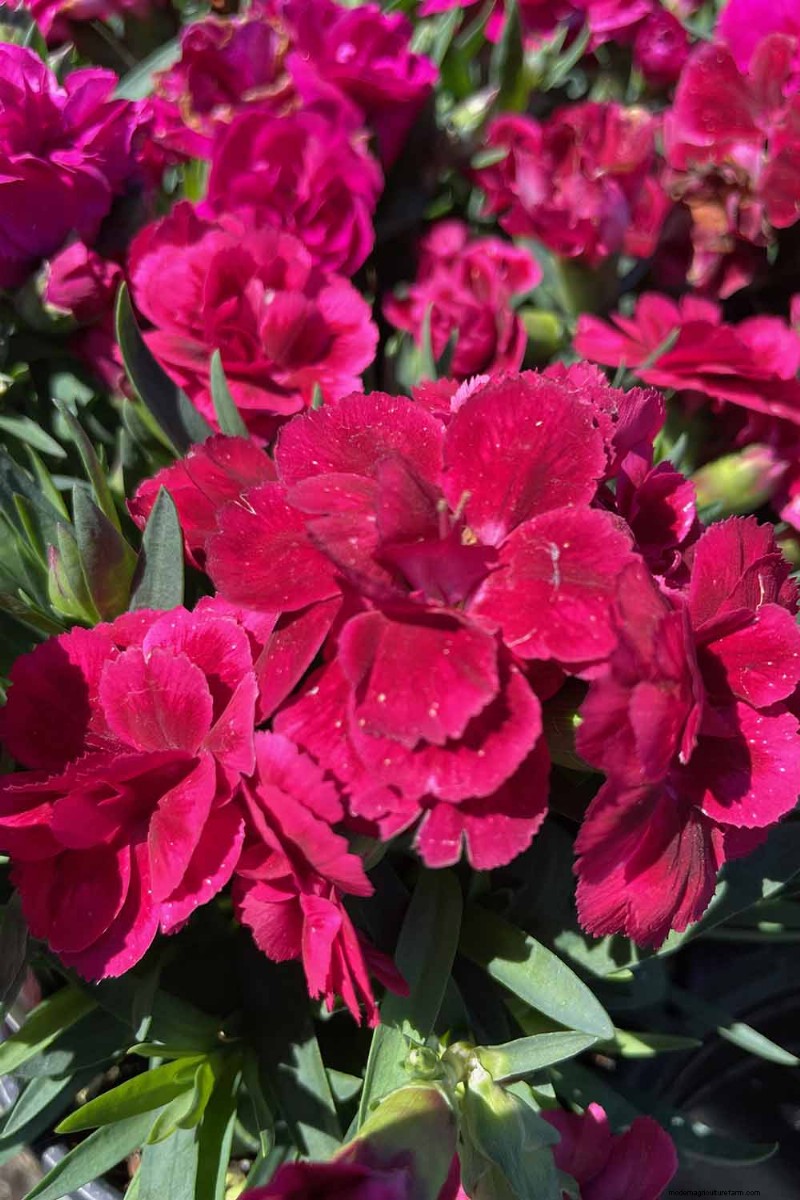
Foto de Kristine Lofgren.
Talvez saber que são comestíveis ajude a torná-los mais populares nos jardins, já que os cravos parecem estar constantemente entrando e saindo de moda.
Embora você certamente possa comer os que compra na floricultura, se você sabe que eles foram cultivados e arranjados sem serem pulverizados com produtos químicos potencialmente tóxicos, é melhor cultivar os seus próprios no jardim.
Dessa forma, eles ficarão mais macios e saborosos - e você não terá que se preocupar com aditivos não comestíveis.
Os cravos são extremamente doces e levemente florais. Na verdade, eles são usados como ingrediente no licor chartreuse por esse motivo.
Recomenda-se aparar os calcanhares para remover qualquer amargor, mas mesmo que não o faça, estas flores ainda serão doces.
As pétalas ficam fantásticas em geléias de morango, tortas e saladas, como cobertura de sobremesas, em conserva em vinagre de maçã com canela ou cristalizadas. Experimente adicioná-los também a bolinhos fritos ou crepes.
Encontre dicas sobre como cultivar e cuidar de flores de cravo aqui .
13. Camomila
Se você tomou chá de camomila, então sabe qual é o gosto desta flor.
Mas
Matricaria chamomilla e
Chamaemelum nobile tem um sabor de maçã que se adapta a muito mais do que bebidas quentes.
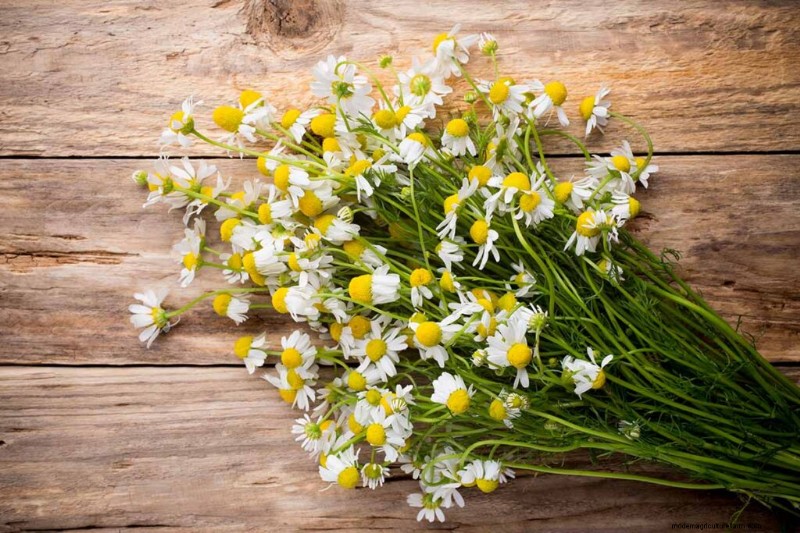
Misture as cabeças de margarida na sopa de missô, aveia, cereais, saladas, coquetéis ou massa de biscoito.
Eles também têm um sabor fantástico em alimentos mais doces, como geleias, sorvetes, doces ou bolos. Em qualquer lugar que um pouco de maçã seria bom é uma boa opção.
Confira nosso guia para
aprender a cultivar camomila .
14. Chicória
Chicória (
Chicorum intybus ) as flores abrem por um dia e depois desaparecem, o que acho que as torna um pouco especiais.
E a sua vibrante tonalidade azul-púrpura torna-os ainda mais bem-vindos no jardim e nos nossos menus.
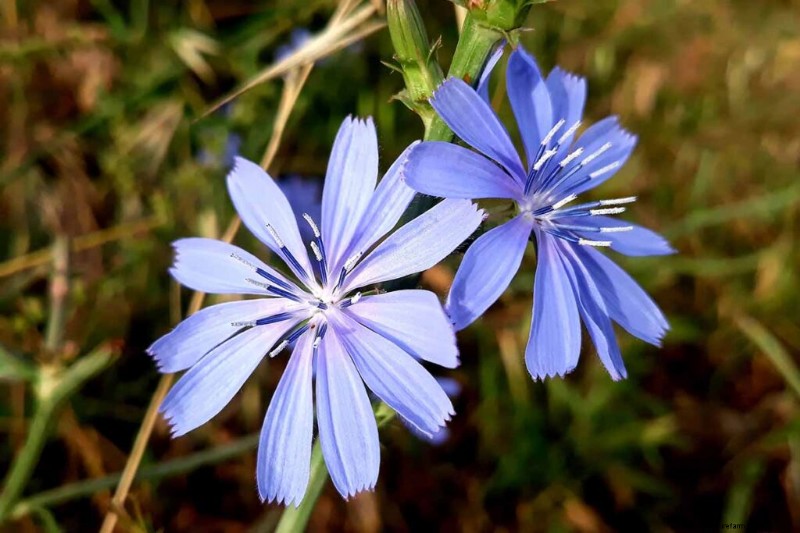
Este parente selvagem do
radicchio compartilha a amargura de seu primo, então use essas flores com moderação. Apenas uma pequena dica em uma salada ou prato vegetariano é suficiente.
Nosso
guia para o cultivo de chicória fornece instruções de cultivo.
15. Crisântemo
Inegavelmente elegantes, os crisântemos (
Crisântemo spp.) são belezas clássicas.
Coloque algumas mães na janela da sua cozinha e você terá um suprimento constante de pétalas coloridas para adicionar algo especial à sua cozinha.
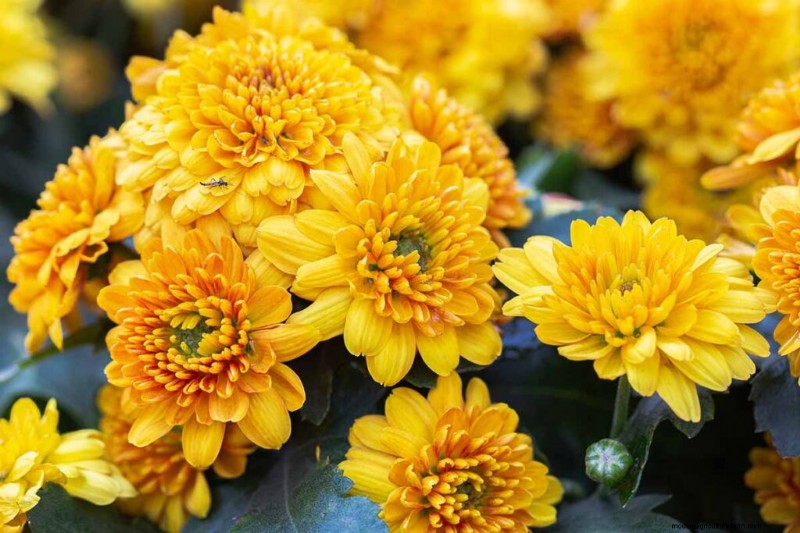
Enxágue bem as pétalas antes de usar, especialmente se suas mães estavam cultivando ao ar livre.
Os insetos podem se esconder facilmente em todos esses cantos e recantos. Gosto de mergulhar o meu por alguns minutos em água fria para afastar qualquer carona. Deixe-os secar sobre uma toalha antes de usar.
Em seguida, é hora de retirar os calcanhares para diminuir o amargor. Segure o caule da planta e puxe as pétalas com a ponta dos dedos.
Apare as partes brancas com uma tesoura enquanto ainda as segura. Coloque as pétalas preparadas em uma tigela e repita.
Adicione pétalas de mãe em pratos de peixe, sopas e ensopados, saladas, refogados, pratos com ovos, batatas e sanduíches.
Branqueá-las ou mergulhá-las em água salgada por 15 minutos dá às pétalas um sabor mais suave se você achar que estão muito fortes.
Saiba mais sobre
cultivo de crisântemos aqui .
16. Cítrico
Não importa se você tem limoeiros, limas, laranjeiras, toranjas ou kumquats, as flores de
todos os Citrus gênero as árvores são igualmente comestíveis e todas têm quase o mesmo sabor.
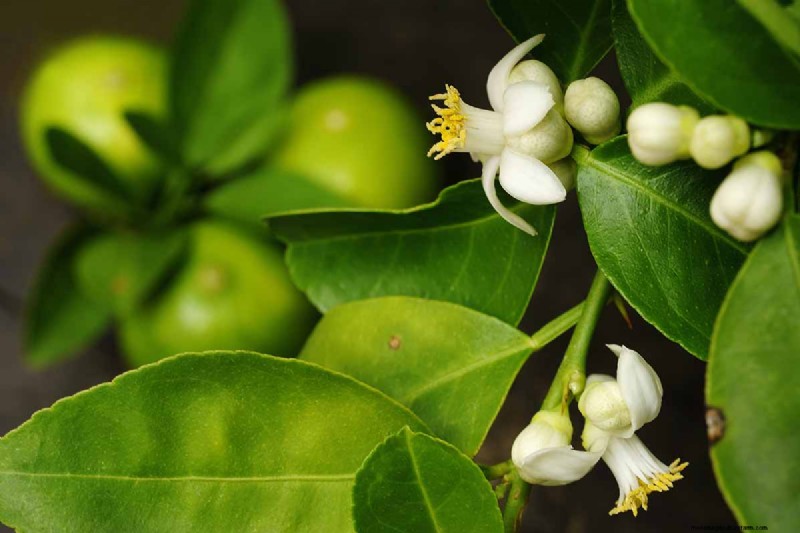
Adicione-os a coquetéis, sobremesas, saladas doces, pratos de caranguejo, sopas frias, pratos de peixe ou frango, suflês ou sorvetes.
Se você ainda não comeu salada de caranguejo com flores cítricas você não viveu! Na verdade, qualquer coisa que tenha um gosto bom com um pouco de sabor cítrico pode ficar igualmente boa com algumas flores delicadas.
17. Trevo
As abelhas adoram, mas alguns jardineiros temem ver um pedaço de trevo (
Trifolium spp.) no quintal. Independentemente de como você se sinta, vale a pena mordiscar as lindas flores.
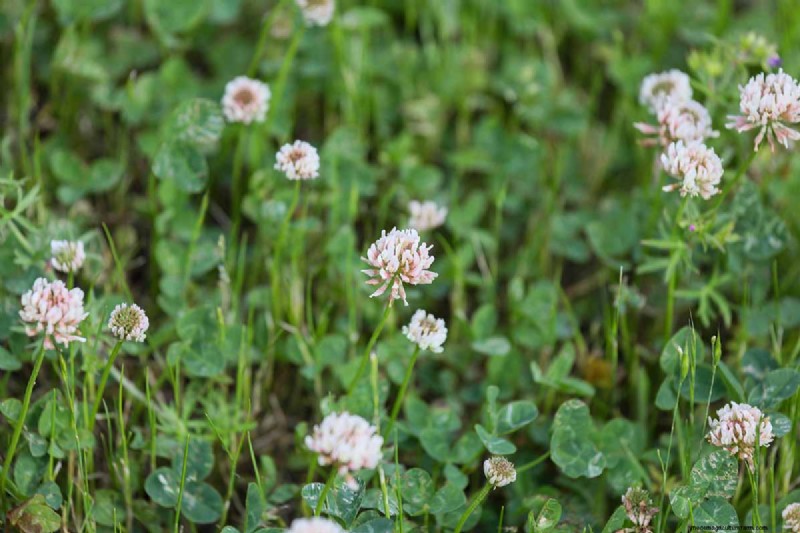
Foto de Kristine Lofgren.
Uma prova e acho que você vai se apaixonar. Isso porque eles têm um sabor doce, semelhante ao mel, que muitas crianças aproveitam quando arrancam uma flor e sugam o néctar.
Você pode secar as flores depois de lavá-las, como faria com qualquer erva. Dessa forma, você poderá aproveitá-los durante todo o inverno.
Apenas
não colha e use flores que já estejam ficando marrons . Eles não são muito palatáveis.
Os trevos são deliciosos como chá, em ovos, em manteiga composta, assados no pão ou em saladas.
18. Coneflor
Coneflowers (
Equinácea spp.) são tesouros norte-americanos.
Eles são maravilhas medicinais, estrelas ornamentais e também produtores prolíficos que são aparentemente imunes à maioria dos problemas que podem destruir outras espécies comuns de jardim.
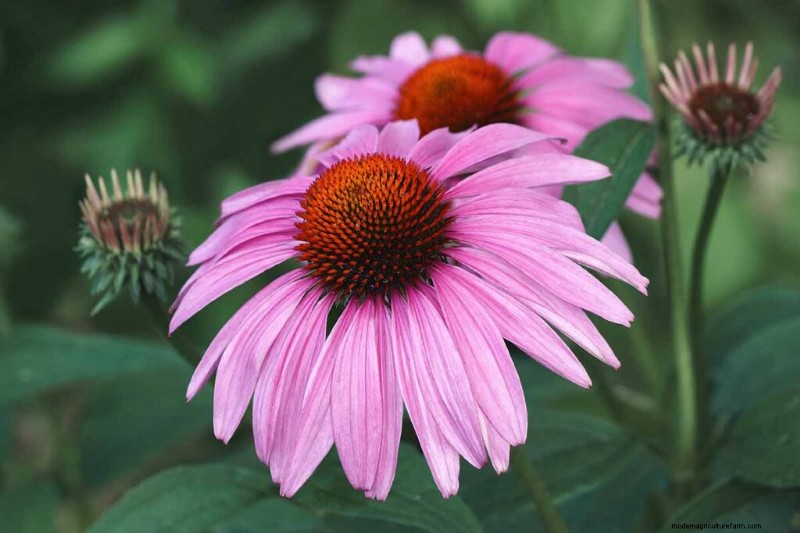
As pétalas das flores de todas as
Echinacea as espécies não são apenas comestíveis, mas pessoalmente as considero deliciosas. Nem todos concordam.
São reconhecidamente um pouco amargos e têm um sabor floral extremamente picante. Cultivares com flores perfumadas, como ‘Fragrant Angel’, têm pétalas menos amargas.
Coneflower de cabeça verde - também conhecido como shochan ou
Rudbeckia laciniata – é de longe a espécie mais saborosa, embora não seja tecnicamente uma
Echinacea espécie de “coneflower”.
Essas plantas não apenas compartilham o nome comum “coneflower”, mas na verdade pertencem à mesma tribo da família Asteraceae, Heliantheae, e estão intimamente relacionadas.
O povo Cherokee come esse tipo de coneflower há séculos e vale a pena procurá-lo.
Arranque as pétalas da cabeça e misture-as em sopas ou saladas, principalmente naquelas que resistem a um sabor mais forte, como a panzanella.
Muitas pessoas colocam raiz de equinácea na canja de galinha como um tônico para combater o frio do inverno, mas gosto de poder provar as flores.
Adoro canja de galinha tailandesa ou mexicana com um monte de pétalas jogadas por cima antes de servir.
Se você está procurando uma excelente receita de canja de galinha mexicana instantânea, visite
nosso site irmão, Foodal .
Não coma as
flores de Susan de olhos pretos intimamente relacionadas (
R. hirta ). Embora as raízes sejam comestíveis, as flores e as sementes devem ser evitadas.
As pétalas não são tóxicas, mas algumas pessoas apresentam alergia ao consumi-las e não têm um sabor muito bom. As cabeças das sementes são levemente tóxicas.
Saiba mais sobre o cultivo de coneflowers aqui .
19. Cosmo
Nem todos os cosmos são comestíveis. Na verdade, você deveria se ater ao
Cosmos sulphureus e
C. caudado exclusivamente.
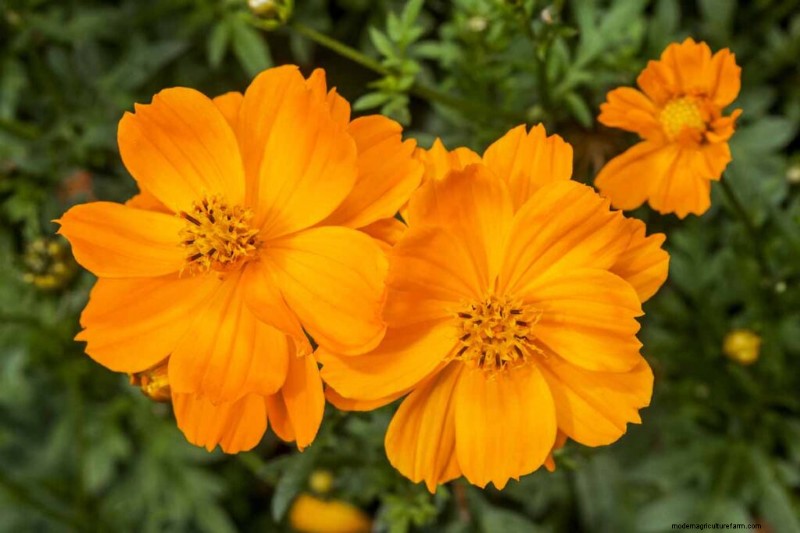
Eles têm sabores ligeiramente diferentes, sendo o primeiro com gosto de ervas e alface, enquanto o segundo tem um sabor doce e frutado, não muito diferente de morango ou manga.
Na Indonésia, onde é consumido com frequência,
C. caudado é conhecido como kenikir. Na Malásia é chamado de ulam raja, que significa “salada do rei”. Parece certo para mim.
Aprenda mais sobre o cosmos e como cultivá-los aqui .
20. Dália
A primeira vez que alguém me disse para comer uma dália,
Dahlia pinnata para ser exato, pensei que eles estavam brincando comigo. De jeito nenhum aquelas flores grandes e dramáticas poderiam ter gosto de algo bom.
Acontece que eu estava certo – mas meu amigo também. As espécies que experimentei não eram as melhores, mas nos anos seguintes tive algumas que eram incríveis.
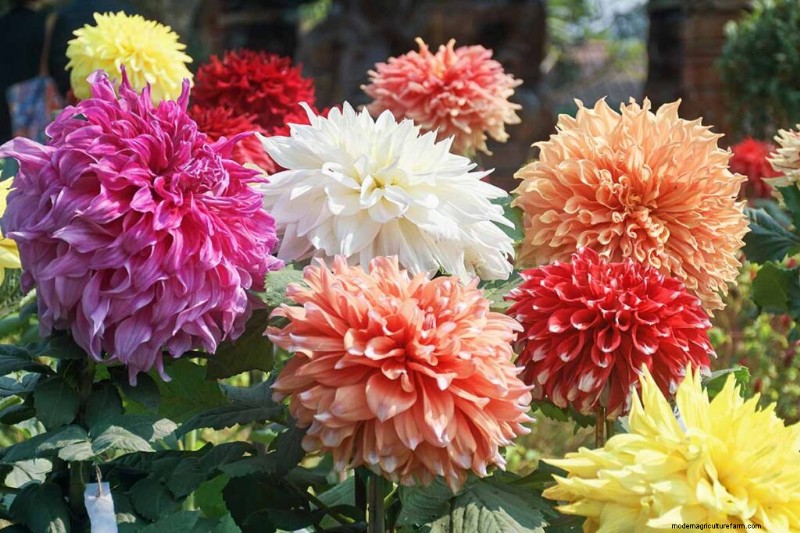
As dálias estão relacionadas aos girassóis e às
alcachofras de Jerusalém . Todas as espécies são comestíveis e algumas delas têm um sabor fantástico.
Eles foram cultivados na América do Sul como cultura alimentar muito antes de se tornarem as belezas que conhecemos hoje.
Encontrar dálias com sabor fabuloso é uma questão de tentativa e erro. Alguns são maravilhosos e têm gosto de castanha de água floral.
Outros são um pouco mais brandos, mas certamente não desanimadores. Meu favorito até agora é
D. coccínea – Provei a raiz e a flor e ambas ficaram fantásticas.
Mas não deixe que isso limite você. Qualquer espécie de dália tem potencial para produzir uma cultivar ou híbrido saboroso.
Na verdade, se você encontrar alguém que ama, divulgue! Deixe-nos saber nos comentários qual variedade é sua melhor escolha.
A textura crocante e fresca adiciona contraste a pratos de queijo e saladas.
Eles também se destacam como cobertura colorida para pratos de peixe ou massa. Pique as pétalas em um molho ou use-as para enfeitar um prato de arroz.
Nosso guia para o cultivo de dálias fornece instruções de cultivo.
21. Margarida
Essas “belezas eternas” – é esse o nome botânico da
margarida comum, Bellis perennis significa – pode ser consumido desde o surgimento dos botões até o momento em que as pétalas começam a murchar.
Os botões são, na verdade, menos amargos do que as flores abertas e podem ser conservados da mesma forma que você faria com os botões de dente-de-leão para fazer “alcaparras”.
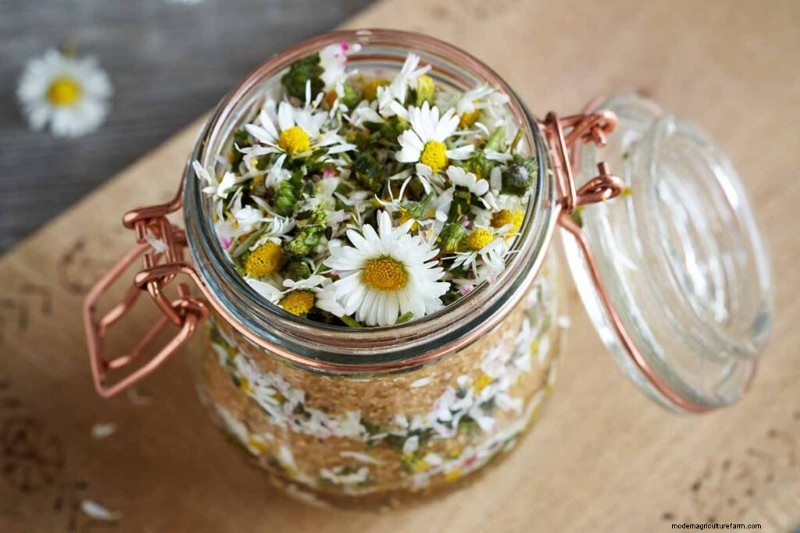
Gosto de jogar flores no queijo cottage, molho de espinafre e saladas, mas elas também ficam bem em manteiga composta ou podem ser cristalizadas.
Esteja ciente de que muitas plantas receberam o apelido comum de “margarida”.
Plantas como
Shasta (Leucanthemum × excelente ) ,
Gérbero (Gérbera spp.) e
margaridas Montauk (Nipponanthemum nipponicum ) não são margaridas verdadeiras e não são comestíveis.
22. Dente de Leão
As folhas tendem a atrair toda a atenção no campo da comestibilidade, mas você definitivamente deveria dar dente-de-leão (
Taraxacum spp.) também floresce.
Depois de colhê-los, mergulhe-os em água fria ou em temperatura ambiente por alguns minutos para expulsar quaisquer insetos que possam estar escondidos na inflorescência.
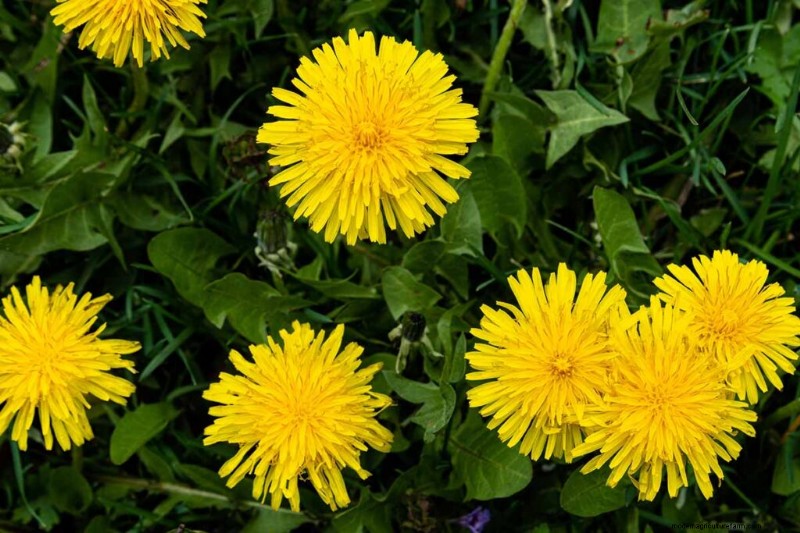 Os dentes-de-leão são incrivelmente versáteis
 . Escolha os botões verdes compactos e deixe-os em conserva para fazer “alcaparras”.
Ou misture os botões com sal, pimenta e manteiga e refogue-os por alguns minutos para fazer uma guloseima com sabor semelhante ao de cogumelos.
As flores podem ser usadas para fazer uma infusão de xarope de dente-de-leão.
Depois de arrancar as pétalas e lavá-las delicadamente em água fria, leve à fervura em uma panela uma mistura de partes iguais de água e açúcar granulado para dissolver o açúcar e fazer um xarope simples.
Retire do fogo, adicione as pétalas e deixe em infusão enquanto deixa a mistura esfriar, na panela ou transferida para uma tigela de metal ou vidro resistente ao calor.
Cubra e deixe descansar em temperatura ambiente por 24 horas. Coe e guarde em uma jarra ou garrafa hermética na geladeira por até uma semana.
Você também pode cozinhar as flores como espinafre ou adicioná-las frescas em saladas. Gosto de picar flores maiores e retirar os pedacinhos verdes para melhorar a doçura.
Flores menores podem ser usadas inteiras.
Claro, você também pode fazer vinho de dente-de-leão, picar as flores para usar em omeletes, enfeitar sopas ou transformá-las em chá.
23. Lírio
Lírios (
Hemerocallis spp.) são vistosas e proporcionam uma exibição impressionante, mas ao contrário de algumas flores que são tecnicamente comestíveis, mas não muito saborosas, são super saborosas.
Acho que são bons o suficiente para que valha a pena cultivá-los como alimentos. A exibição é apenas um bônus.
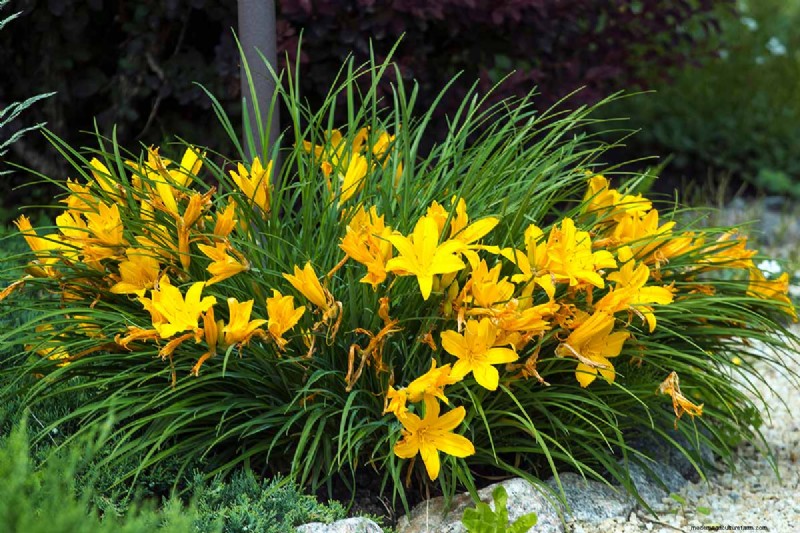
Hemerocallis comestível.
Arranque as flores pela manhã, quando elas abrirem. As pétalas têm gosto de
feijão verde com mel e um toque de pimenta preta.
Não coma os pistilos e estames. Embora não sejam venenosos, têm textura e sabor desagradáveis.
Pickle as pétalas suculentas, use-as como cobertura para carne e peixe, ou pique e adicione-as aos ovos ou saladas. Recheie-os ou bata-os e frite-os como se fosse esmagar flores.
Minha boca está salivando só de pensar nisso… Apenas certifique-se de retirar cuidadosamente os pistilos e estames primeiro.
Mas não confunda daylilies com
lírios verdadeiros (Lilium spp.) , que são venenosos! Observe as folhas para determinar qual é qual.
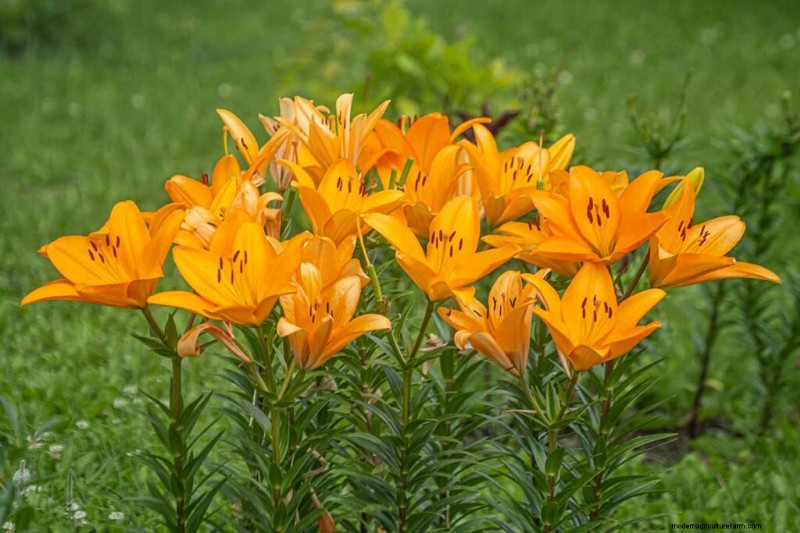
Este híbrido asiático é um verdadeiro lírio, e essas flores
não comestível.
Os daylilies têm lâminas longas e planas que emergem da linha do solo. Você também encontrará vários caules na planta. Os lírios têm um único caule com uma espiral de folhas que sobe pelo caule.
Saiba mais sobre daylilies em nosso guia .
24. Flor de sabugueiro
Quer você os cultive para alimentação, remédios ou uso ornamental, aqueles cachos de flores de sabugueiro brancas com cheiro celestial (
Sambucus spp.) são um deleite fabulosamente doce. Eles têm gosto de uva doce.
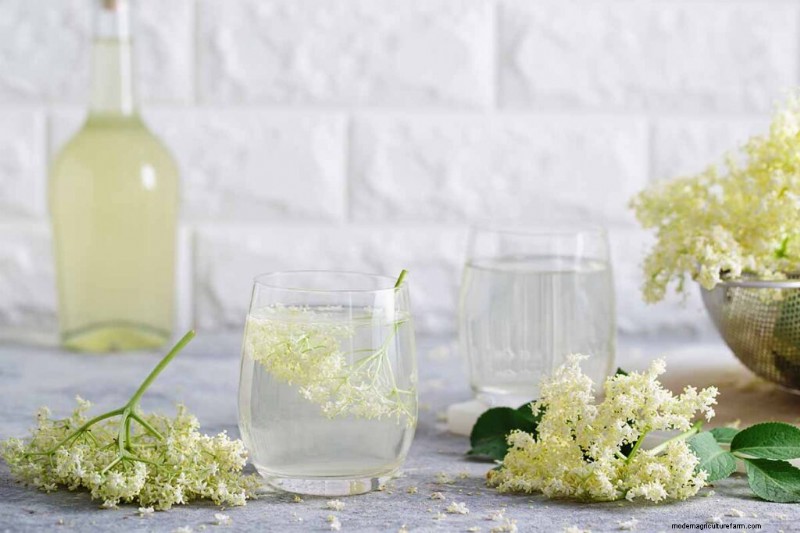
Obviamente, eles são popularmente transformados em vinho, mas você também pode usá-los para cobrir panquecas ou bolinhos fritos, bater e fritar, ou usá-los como guarnição para pato ou frango.
Você deve ter cuidado com o momento da colheita das flores. Se você esperar muito, algumas flores em cada cacho já estarão desbotadas e marrons, e não terão gosto nada bom.
Primeiro, certifique-se de que todas as flores estejam abertas. Eles amadurecem começando de fora e avançando para o centro.
Enxágue-os suavemente em água fria e deixe-os secar antes de usar. Você vai perder as frutas ao colhê-las, mas a sensação de sabor vale a pena.
Confira nosso guia para o cultivo de sabugueiro .
25. Prímula
Claro, eles são famosos por seu óleo medicinal, mas prímula (
Oenothera biennis ) também é totalmente comestível. Coma os botões crus ou cozidos e as pétalas cruas. Você também pode comer as sementes.
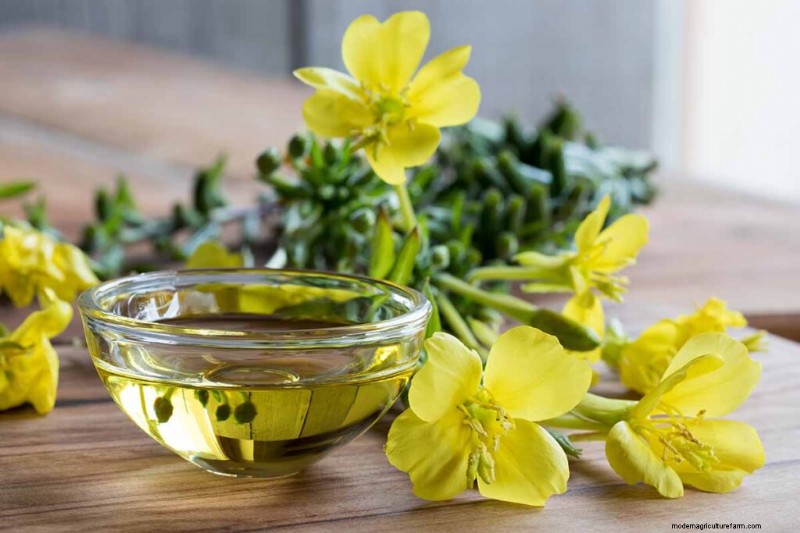
As pétalas têm sabor cítrico de mel, ideal para pratos doces como biscoitos, bolos, biscoitos amanteigados e pavlovas.
Se você deseja
cultivar prímula em seu jardim, confira nosso guia .
26. Não me esqueça
Tão doce e delicado quanto uma orelha de rato – cujo nome de gênero é
Myotis significa em grego - as pequenas flores de um não-me-esqueças (
Myotis spp.) são fofos demais para serem esquecidos.
Se você está bebendo o Frappuccino Forget-Me-Not da Starbucks, o sabor deles não é nada parecido. As flores reais têm uma nota levemente floral e amarga.
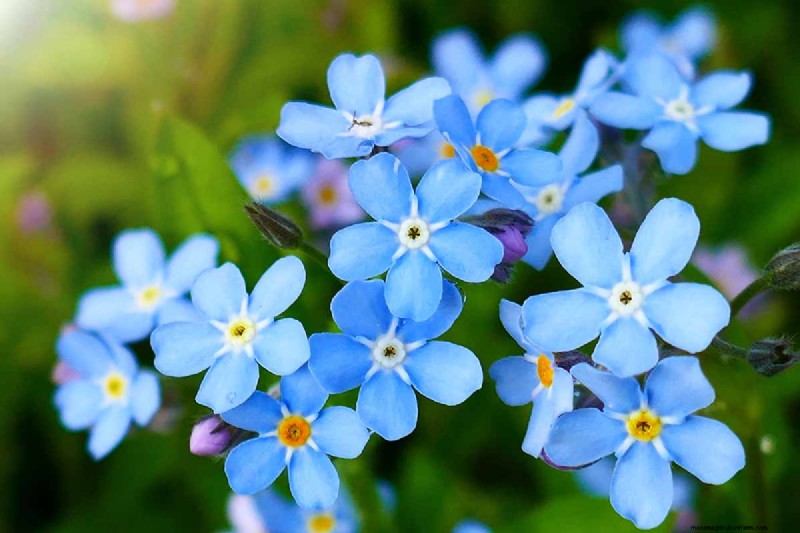
Eles são melhor cristalizados e usados para cobrir sobremesas, já que o açúcar mascara um pouco do amargor.
Saiba mais sobre os miosótis aqui .
27. Forsítia
Talvez você suspire de alívio quando a primavera chegar e a forsítia (
Forsythia spp.) ilumina a paisagem.
Eu sei que sim, pois isso significa que os sombrios meses de inverno ficaram para trás. Mas essas pétalas vibrantes também anunciam a chegada da hora de mastigar a forsítia!
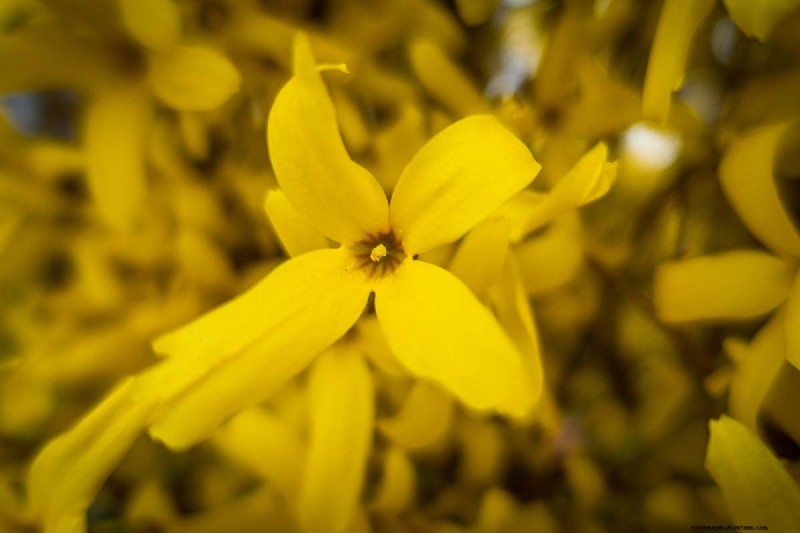
Eles têm um sabor floral suave que não vai dominar nada, mas a cor é marcante o suficiente para compensar seu sabor suave.
Use-os para fazer xarope, mel aromatizado, óleo em infusão, compotas e geleias, ou simplesmente jogue-os em uma salada para adicionar cor.
Consulte nosso guia de cultivo de forsítia para obter instruções de cultivo .
28. Fúcsia
Fúcsia (
Fúcsia spp.) são
algumas das melhores flores para comer , na minha opinião. As bagas também são fantásticas.
Temos até um guia inteiramente dedicado ao plantio, colheita e alimentação deles , incluindo as melhores variedades para experimentar.
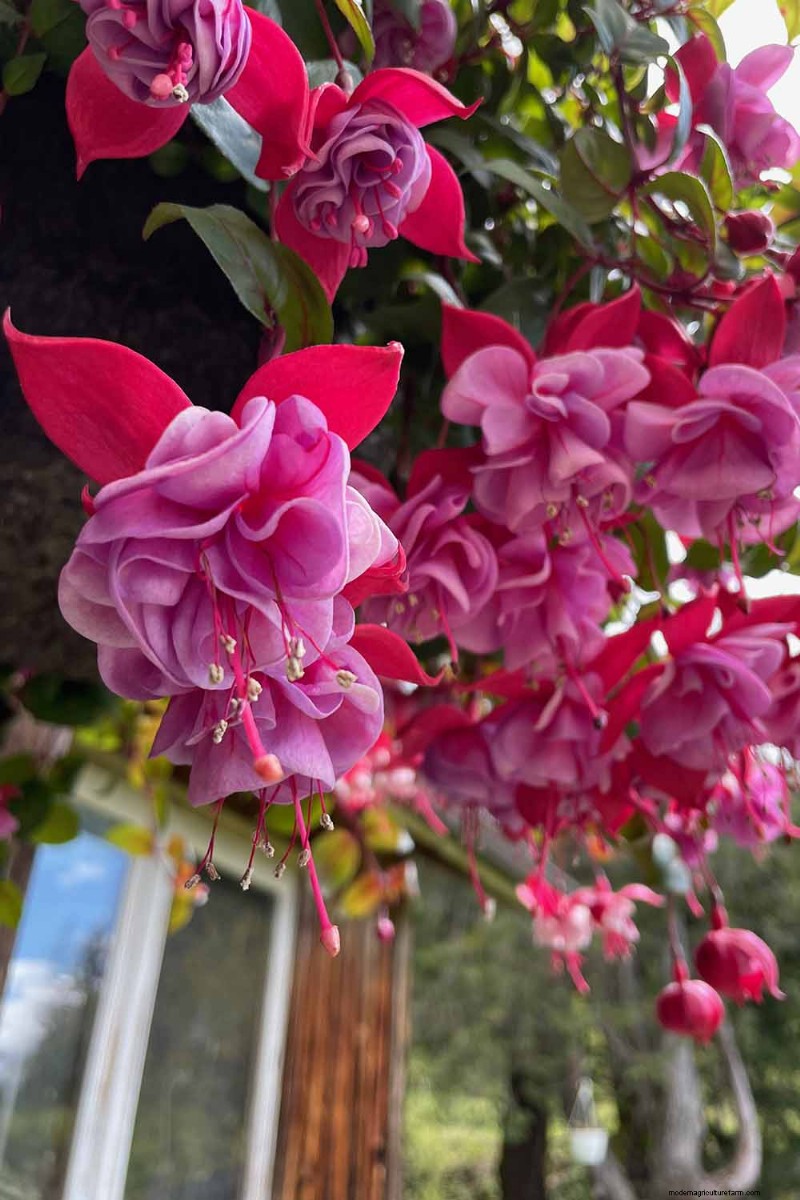
Foto de Kristine Lofgren.
Algumas espécies têm um sabor melhor do que outras, mas são todas comestíveis e saborosas.
É difícil superar essas flores como cobertura para uma salada ou sopa, adicionadas antes de servir, pois são tão lindas. Use-os como guarnição comestível para pratos de arroz ou bebidas.
29. Gardênia
Lindas gardênias (
Gardenia spp.) cheiram como um pedacinho do céu e têm um sabor igualmente bom.
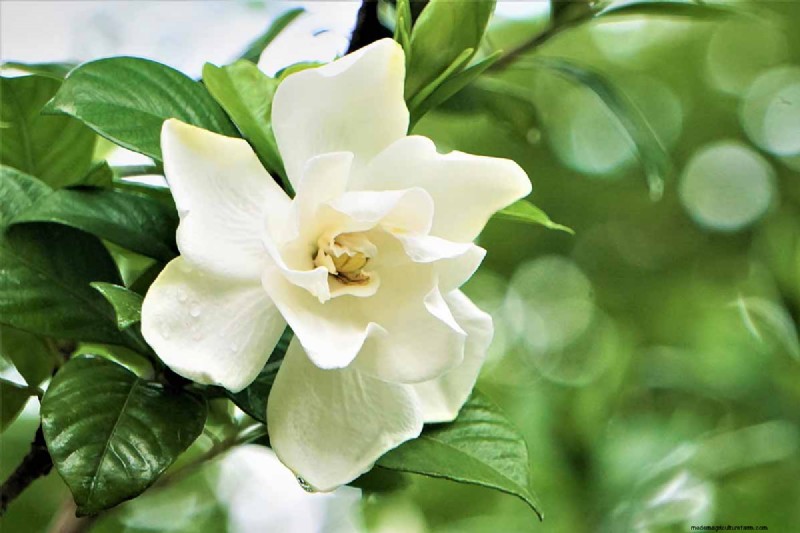
Outrora famosas por serem usadas em corsages e exibições de casamento, as flores doces como mel podem ser em conserva, cristalizadas ou batidas e fritas como bolinhos fritos.
Use-os para infundir mel, em sorvetes, com chantilly para cobrir merengues, ou ainda pode adicioná-los em refogados.
Saiba mais sobre o cultivo de gardênia em nosso guia .
30. Gerânio
Gerânios perfumados (Pelargonium spp.) não têm um sabor tão bom quanto o cheiro, mas definitivamente vale a pena experimentar para ver qual variedade você mais gosta.
Algumas flores são melhor utilizadas como guarnição ou para dar aroma ao prato, enquanto outras são incrivelmente deliciosas.
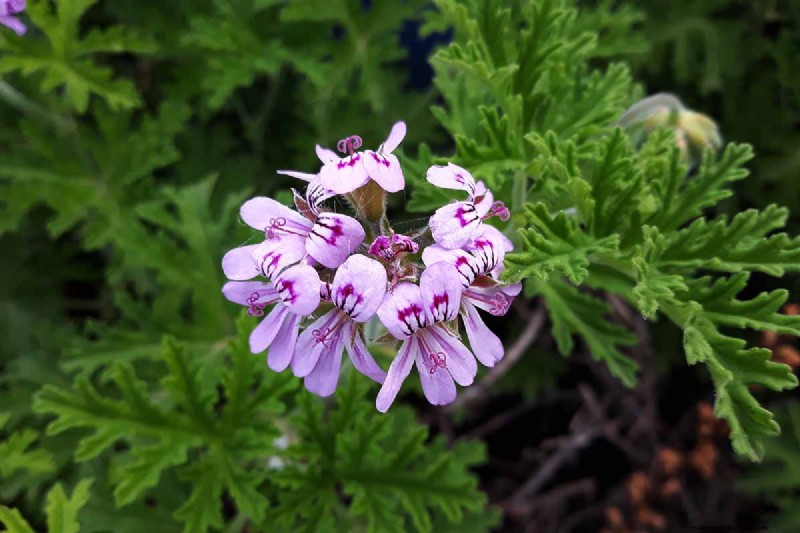
As variedades cítricas são vencedoras em pratos de peixe e carne, enquanto a cultivar com aroma de rosa fica linda em sobremesas.
Gerânios Cranesbill (Geranium carolinianum ) também são comestíveis, das raízes às flores, mas não são tão saborosos quanto seus primos perfumados.
As
flores em gerânios zonais (P. x hortório ) também são comestíveis. Mas experimente antes de se comprometer a usá-los em uma receita, porque o sabor amargo não agrada a todos.
31. Gladíolo
Gladíolo (
Gladíolo spp.) tem gosto muito de alface romana, mas essas flores ficam muito mais bonitas no jardim.
Esse perfil de sabor os torna perfeitos para uso em saladas, mas você também pode adicioná-los à sopa de alface ou adicioná-los a sanduíches para dar um toque de cor ousado.
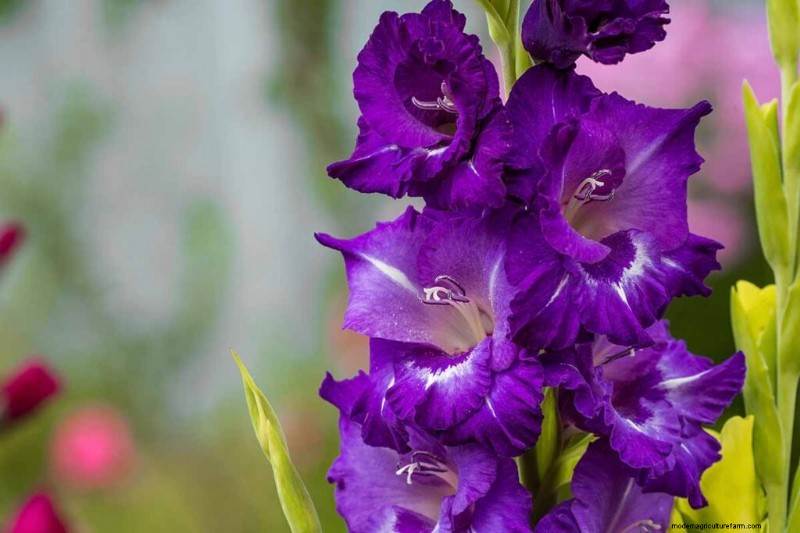
Melhor ainda, recheie-os como se fosse esmagar flores. Try shredded chicken, tuna, egg, cheese, or anything else that strikes your fancy.
Just imagine a plate full of orange, maroon, purple, and salmon-colored gladiolus being passed around as appetizers at a party. They’re impressive.
Be extra careful to wash these flowers gently because they can become crushed or ripped quite easily.
Learn more about growing gladiolus in our guide .
32. Hawthorn
These are my least favorite to harvest of all the blossoms on this list, thanks to the tree’s gnarly thorns, but hawthorn (
Crataegus spp.) flowers are quite flavorful.
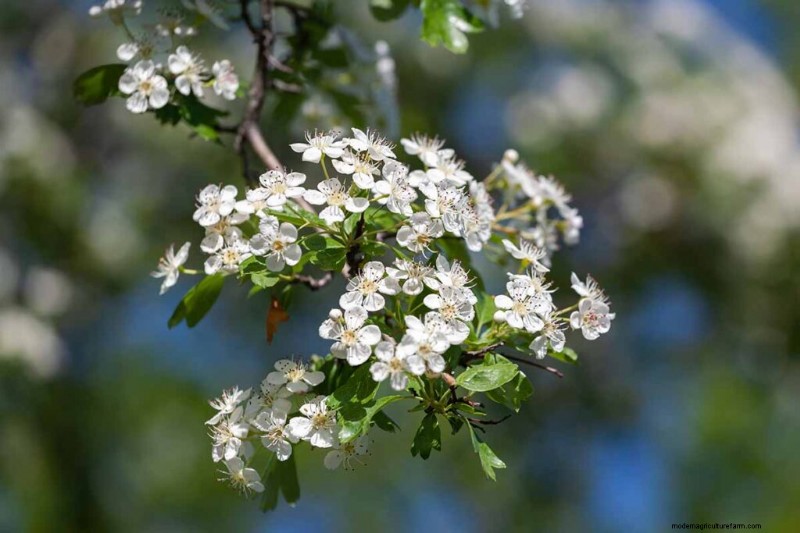
You should only eat the flower buds or the young, recently opened flowers, never the older blossoms that are turning brown.
And as just a brief aside on hawthorn fruit – don’t even think about eating the seeds inside the berries since they’re poisonous. The flesh of the berries, however, is fine to consume.
Young hawthorn flowers and buds have a similar flavor to crabapple blossoms, which are lightly floral.
Learn more about hawthorn care here .
33. Hibiscus
One of the few flowers that can stand up to cooking, Hawaiian hibiscus, also known as rose mallow or
Hibiscus rosa-sinensis , has a tart flavor that is oh-so-refreshing.
If you’ve ever had Jamaica tea then you know what I’m talking about.
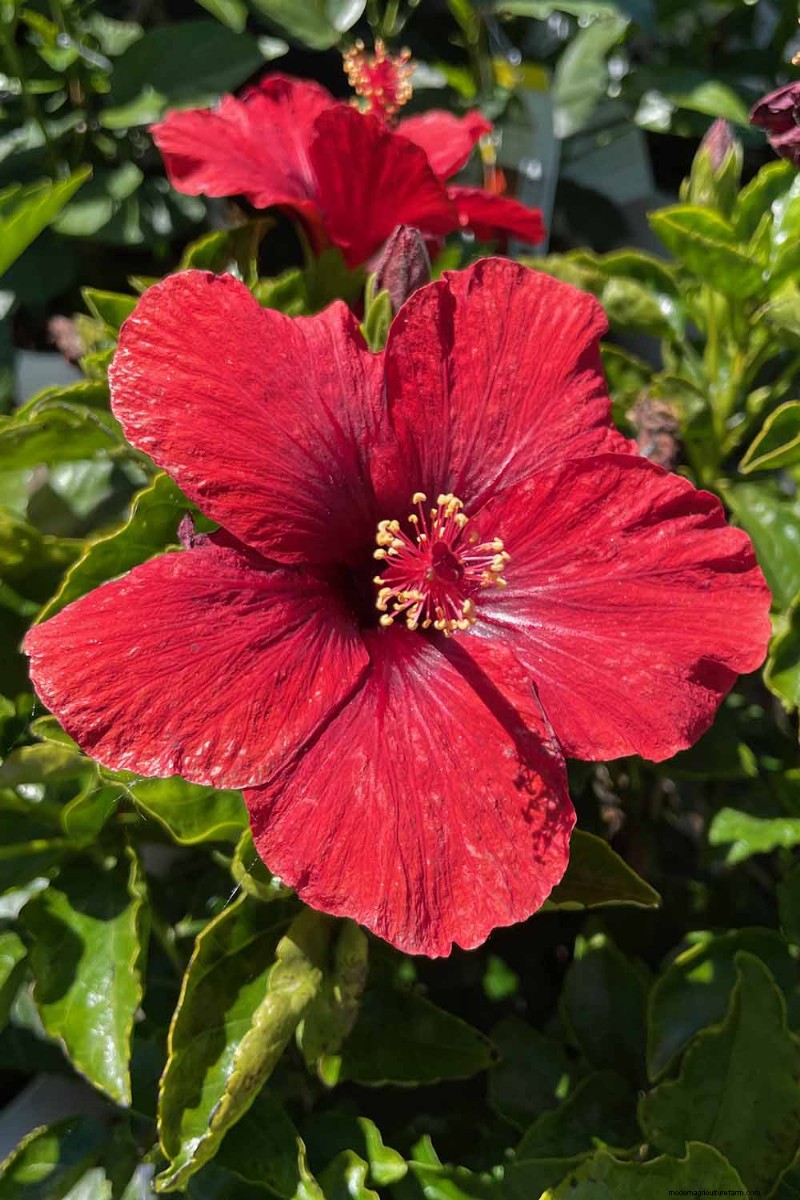
Photo by Kristine Lofgren.
All perennial hibiscus species are edible, but
H. rosa-sinensis and
H. sabdariffa are the best tasting.
Cook them in quesadillas, enchiladas, or taquitos, toss them in salads and cocktails, bake them into tarts and pies, or make them into jam.
Our guides provide cultivation instructions for
hardy hibiscus and
tropical hibiscus .
34. Hollyhock
Hollyhocks (
Alcea spp.) have been around for an extremely long time, and they’re one of the earliest recorded cultivated flowers.
People in their native Asia and Europe munched on them and used them as ornamentals in the garden simultaneously.
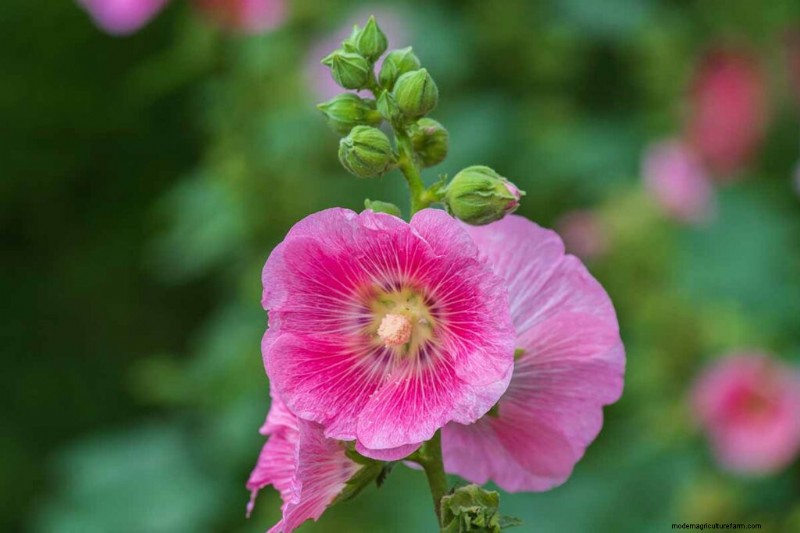
Remove the seedy center and use them on salads, in cocktails, on desserts, or to garnish a cheese plate.
Learn more about hollyhocks in our growing guide .
35. Honeysuckle
If you ever sucked on the ends of honeysuckle blossoms (
Lonicera spp.) when you were a kid, then you know just what you’re in for.
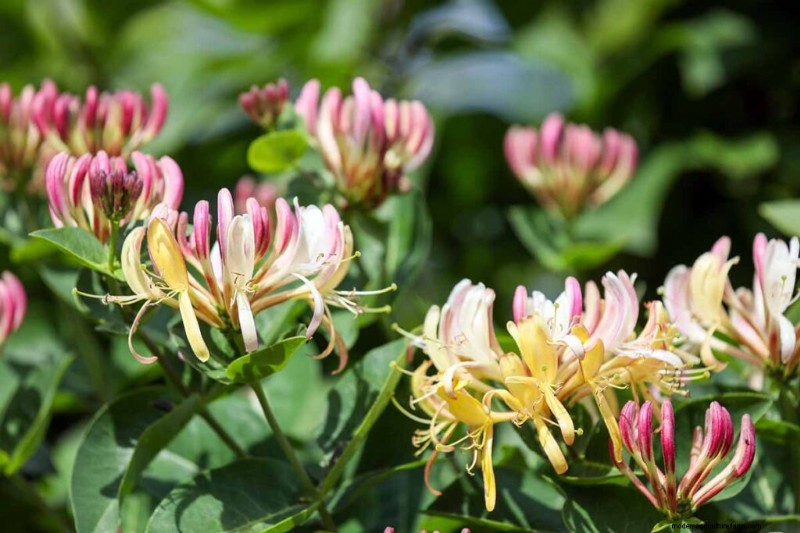
Photo by Kristine Lofgren.
Honeysuckle is sweet, floral, and yes, similar to honey in flavor. The flowers are wonderful for infusing tea or honey, and tossed on desserts or into salads.
Consult
our growing guide to learn how to cultivate honeysuckle .
36. Hosta
A lot of people don’t realize
how beautiful hosta (Hosta spp.) flowers can be , and even
more people don’t know that they’re edible – as are the young shoots of the plant.
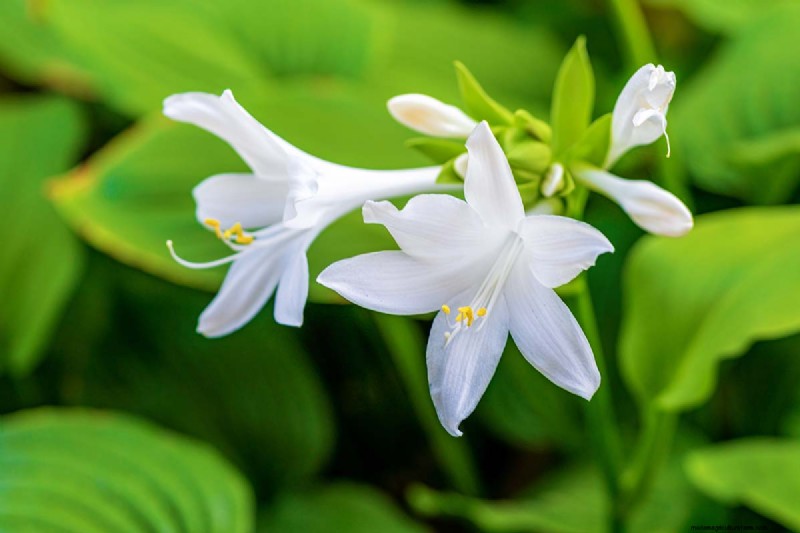
I wouldn’t say that they’re worth cultivating solely for the edible flowers, however, since they’re pretty mild. But they’re not at all bitter, and they have a subtly sweet, floral flavor.
Learn more about cultivating hostas here .
37. Impatiens
Impatiens walleriana are a standard in shady garden spots, but they should also be more popular in the kitchen.
Flowers of this species are most commonly referred to simply as impatiens, or sometimes as busy Lizzies.
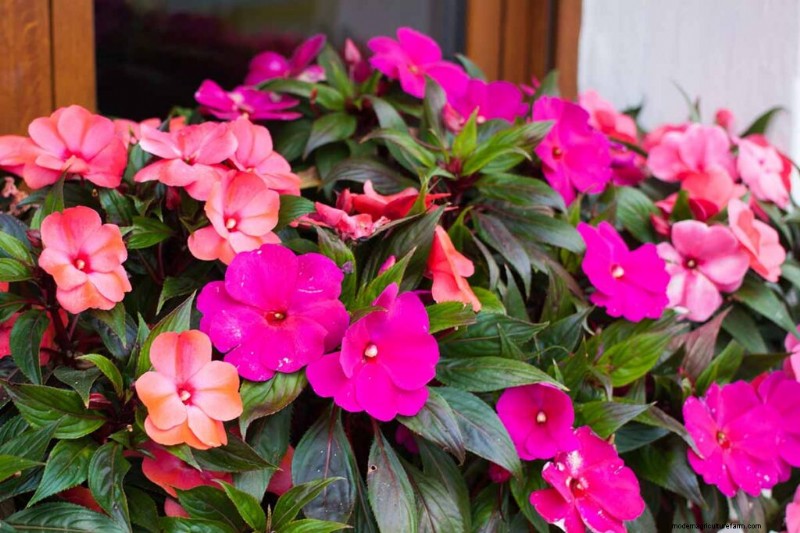
The petals are surprisingly sweet and crisp. They’re just perfect for cocktails, desserts, salads, and sandwiches.
Don’t eat any other
Impatiens species.
Some,
like jewelweed , are edible but should only be consumed if they’ve been cooked. It’s easier to just stick with the good old garden classic we know and love for this genus.
Learn about how to grow impatiens here .
38. Jasmine
There are lots of different types of jasmine out there but
only Arabian jasmine (
Jasminum sambac ) is edible.
Every other species is poisonous, so you have to be absolutely, 100 percent sure that you’ve got the right one.
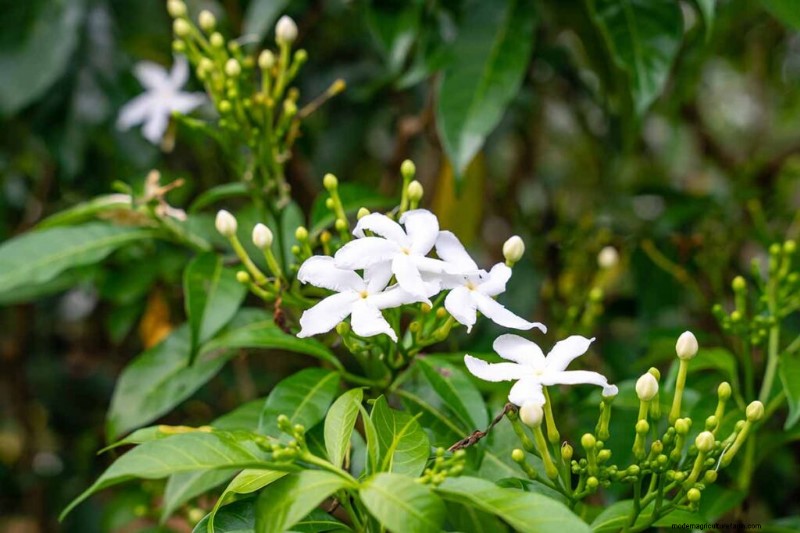
So long as you have the correct plant, you can enjoy the pungent blossoms sparingly as a garnish, or in syrups or cocktails.
The flowers are pungent and they can overpower your senses.
Check out our guide to growing jasmine to learn more.
39. Lavender
I’ll warn you in advance, lavender (
Lavandula spp.) should also be used sparingly. It isn’t bad for you, but the flavor is bold.
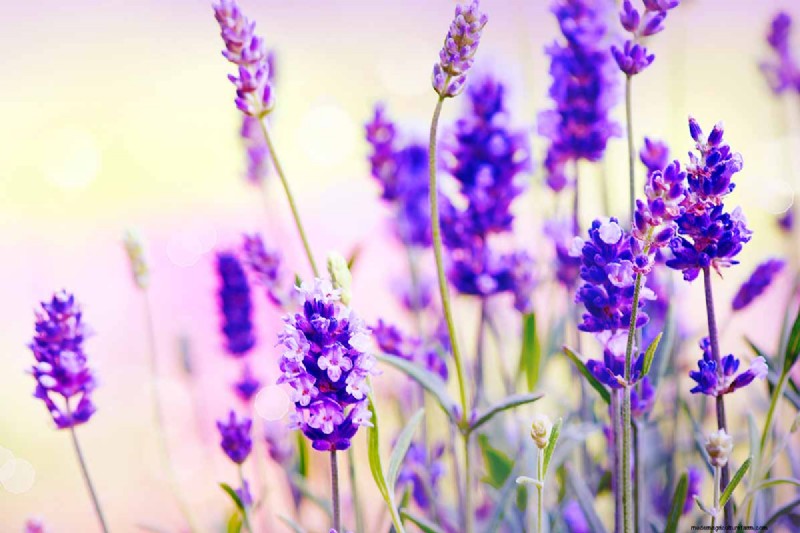
You know that pungently floral, spicy fragrance of the flowers? They taste just like that. That’s why so many people prefer them candied, since the sweetness cuts down on the spice.
Lavender tea is marvelous, and as many people already know, the candied flowers are an edible floral staple.
But be a little more creative! Use lavender in cocktails, fruit salads, and on desserts, to make jams and jellies, or in pies.
Then, try the blooms rubbed onto beef as part of a spice blend, chopped finely and added to a sauce for lamb, or tucked in around a roasted chicken before serving.
Our
guide to growing lavender provides full cultivation instructions.
40. Lemon Verbena
You already know that you can eat the leaves of lemon verbena (
Aloysia citradora ), but the blossoms taste just as good, if not better.
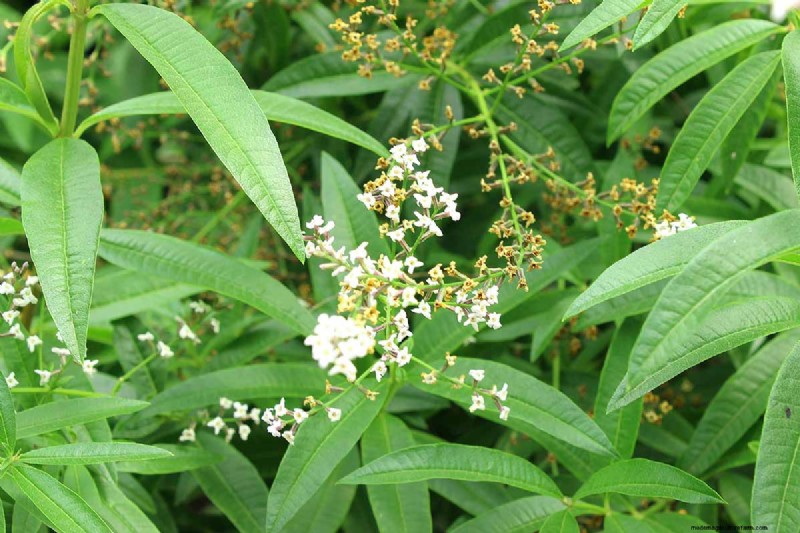
They have a similar flavor with an added floral hint. Use them liberally in cocktails and desserts.
Learn more about lemon verbena here .
41. Lilac
Lilacs (
Syringa spp.) taste just like they smell:pungently floral and sweet.
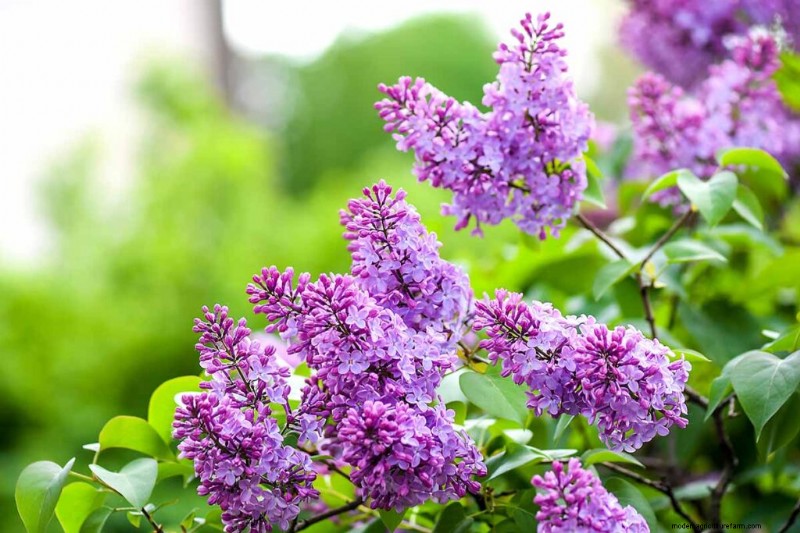
Every spring, I stuff lilac blossoms into a mix of equal parts sugar and water, and cover it with a cotton cloth.
Then, I agitate the mixture every day for a few days. Next, I strain the liquid and seal it with a lid.
After a few days, the yeast on the flowers causes the liquid to ferment. Voila, you have a naturally fizzy drink with a marvelous flavor!
You can also candy these flowers or use them on desserts.
Learn more about lilacs in our growing guide .
42. Linden
Gardeners seem to have a love-hate relationship with linden trees (
Tilia spp.). They can be messy, but my goodness, the flowers smell incredible! And you can eat them, too.
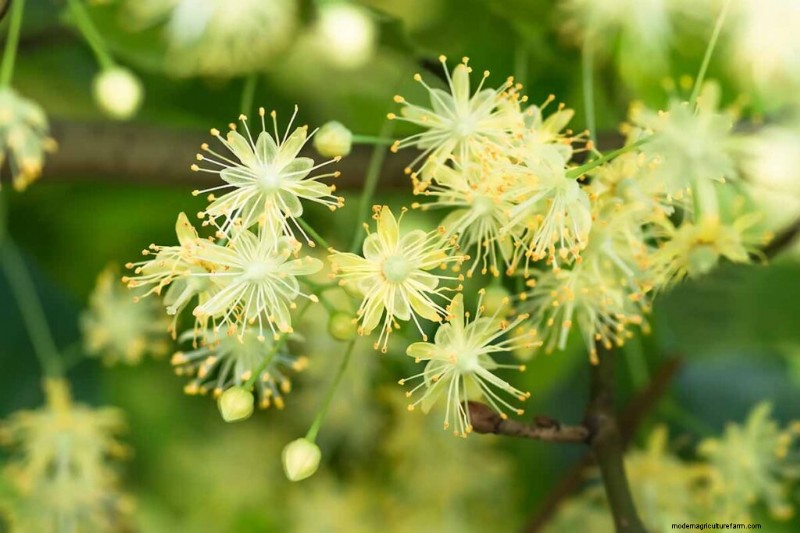
Gather them soon after they open, before they start to turn brown. Use them to garnish desserts or cocktails.
Learn more about growing linden trees here .
43. Lotus and Water Lily
These close relatives look and taste very similar. Many people eat the roots of lotuses (
Nelumbo spp.) and water lilies (Nymphaeaceae family), but the flowers are edible as well.
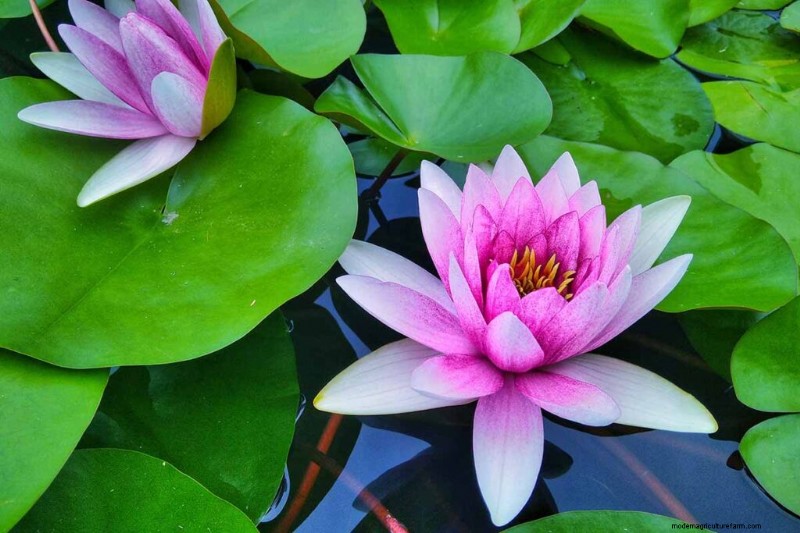
Remove the sepals and stamen and then stuff the honeydew-flavored flower with anything your heart desires, like cream cheese, dip, or pickled veggies.
You can batter and fry them, chop them to add to soups and salads, or just use them as a garnish.
44. Magnolia
Magnolia blossoms (
Magnolia spp.) are edible, but there’s a lot of debate about which type tastes best.
Some people swear the ones with pink petals are the way to go, while others say the magenta and white ones are superior.
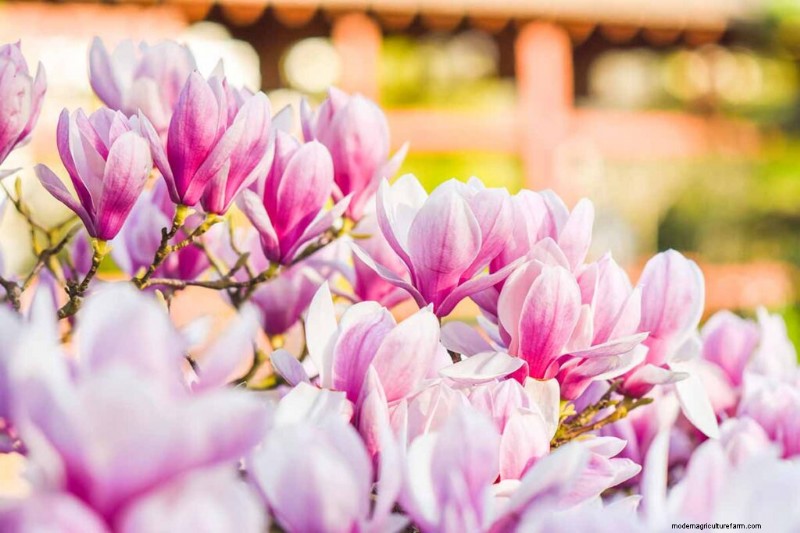
I say, just take a nibble of whatever you have access to and decide if it’s for you or not.
The darker the color, the more bitter the flavor becomes. White is more citrusy, and pink has hints of cardamom.
The petals are excellent pickled and can be used to replace pickled ginger, since the blossoms also have a ginger-like flavor.
Check out our guide to growing magnolia to learn more.
45. Mallow
Mallow (
Malva spp.) is a unique addition to the kitchen in that we don’t usually eat these plants for their flavor, but for the texture they provide.
You can add the mucilaginous leaves to soups as a thickener.
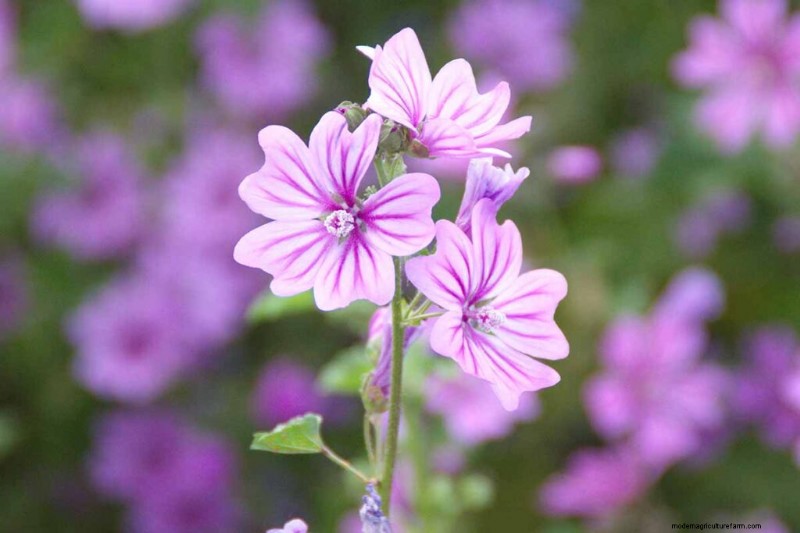
The petals are also flavorful either cooked or raw, but test out the texture first before you go all in.
The viscous mouthfeel can be off-putting to some people, but the mild flavor makes this flower ideal when you want something similar to tofu that will absorb any flavor you pair with it.
Use it anywhere you would use okra, in soups, salads, or stir-fries.
46. Marigolds
Of all the species on this list, marigolds (
Tagetes spp.) might be the most versatile.
The petals are perfect in breads, rice, stews, soups, cakes, and drinks, as well as egg, fish, chicken, beef, or veggie dishes.
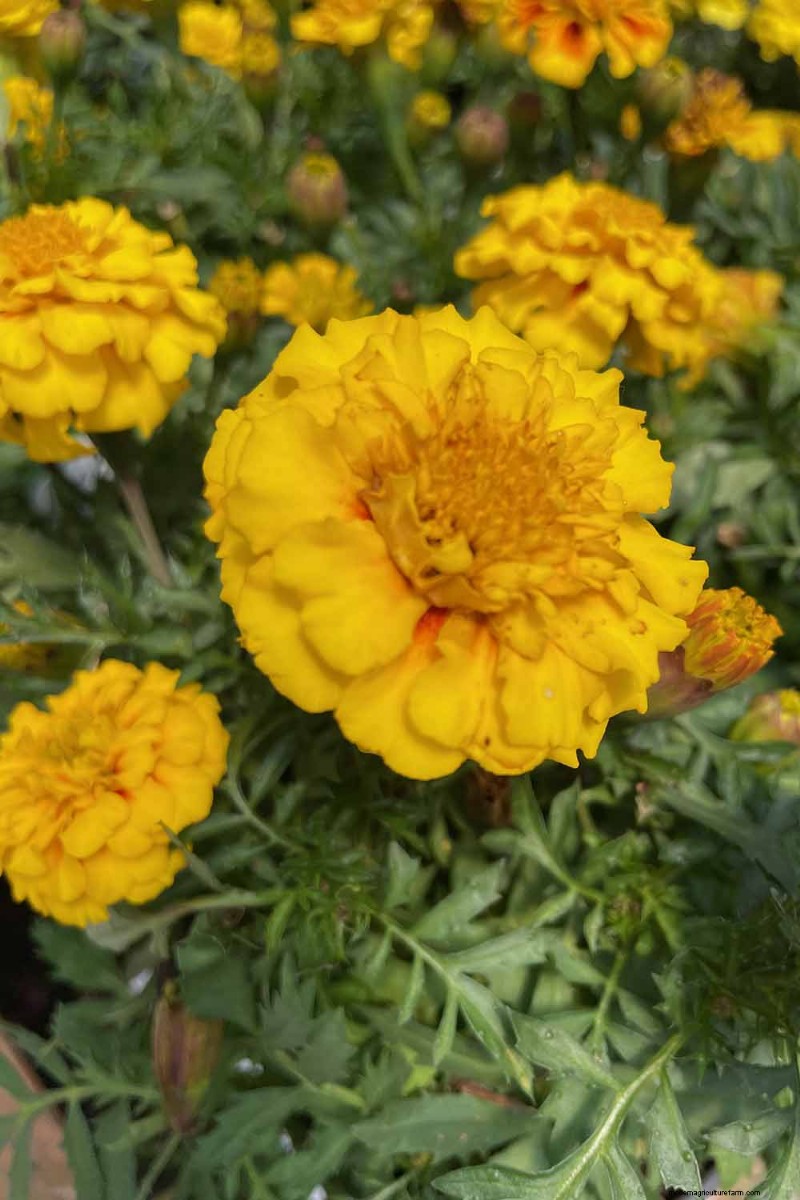
Photo by Kristine Lofgren.
They can be pickled with vegetables, added to compound butter, and used to garnish cocktails. And don’t forget their appeal in sandwiches, fish salads, and custards!
The dried leaves can also be used as a saffron substitute to add color to cooked dishes.
We have a
whole guide available to help you use and enjoy these classic beauties .
And to
learn how to grow marigolds, check out our guide .
47. Mint
We all know that mint leaves (
Mentha spp.) are incredible, but how often do we actually eat the flowers?
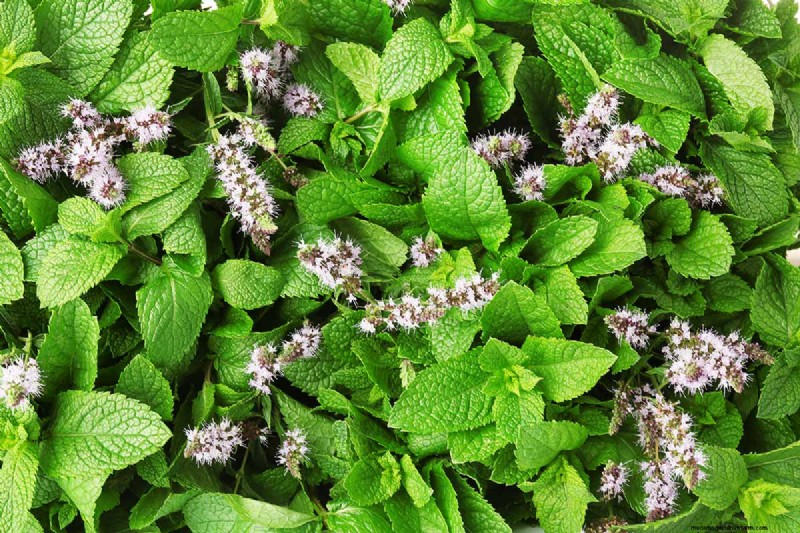
Not often enough, I say! Use them anywhere you’d use mint. They have a similar flavor with a hint of floral goodness that I think makes them taste even better than the famous leaves.
They’re a bit of a pain to prepare since you have to carefully pop each flower off of the stem individually, but once you have a small handful, you have a game-changing ingredient available to garnish drinks, desserts, salads, and soup.
Seriously, try a palmful on a bowl of cucumber and milk or yogurt soup and tell me it didn’t blow your mind.
Our sister site Foodal has a recipe worth checking out.
You always read in gardening guides about how you should trim any flowers off of your mint plants, but I say save them and put them to work in the kitchen!
Learn more about growing mint in your herb garden here .
48. Nasturtium
If watercress and honey had a baby, it would be nasturtium (
Tropaeolum spp.).
And that’s not a surprise, given that this plant was once considered a type of cress until Linnaeus reclassified it in the eighteenth century.
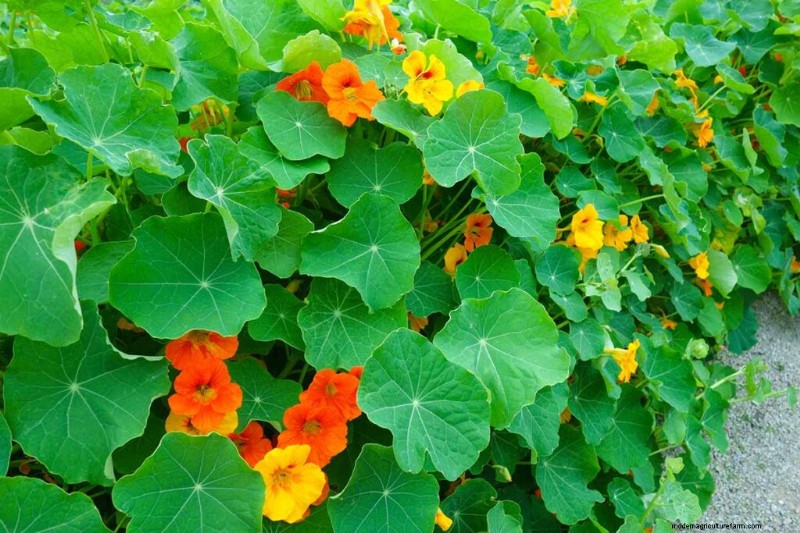
These flowers should be eaten fresh, and they don’t dry well. They also don’t cook well and taste bitter once they start to wilt.
For that reason, add them to warm dishes like omelets, quiche, fish, veggies, and soups immediately before serving.
Otherwise, use them in cool dishes like salads, sandwiches, and desserts.
Broccoli and
brussels sprouts become much more interesting when drizzled with melted butter infused with nasturtium blossoms.
Add the blossoms to the jar when pickling veggies, use them as tiny lettuce-like wraps, or make a pesto.
Find more ideas and tips in our guide to eating nasturtiums , and if you need
growing info, you can find it here .
49. Orchid
Orchids can be a little hit and miss when it comes to edibility, and there are many varieties out there. But if you stick with
Dendrobium species, you’ll be in good shape.
These are the ones you can often find packaged at stores and sold for use in cooking. The flowers are firm and crisp with a flavor similar to
endive .
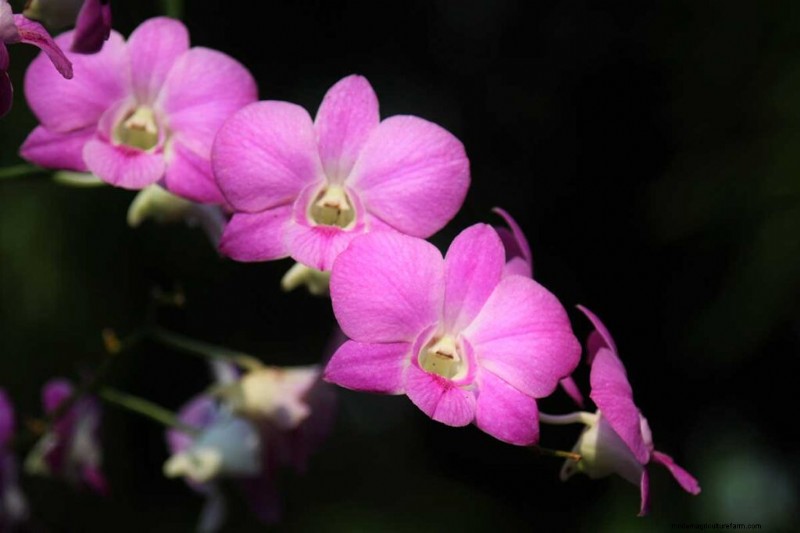
They’re a hit battered and fried, but they’re also lovely in cocktails, in salads, or dipped in sugar for a sweet treat.
Want to learn more about orchids? Our guide has you covered .
50. Pansy
Most pansies (
Viola tricolor var.
hortensis ) don’t have much flavor on their own. They’re best candied, or simply used as eye candy.
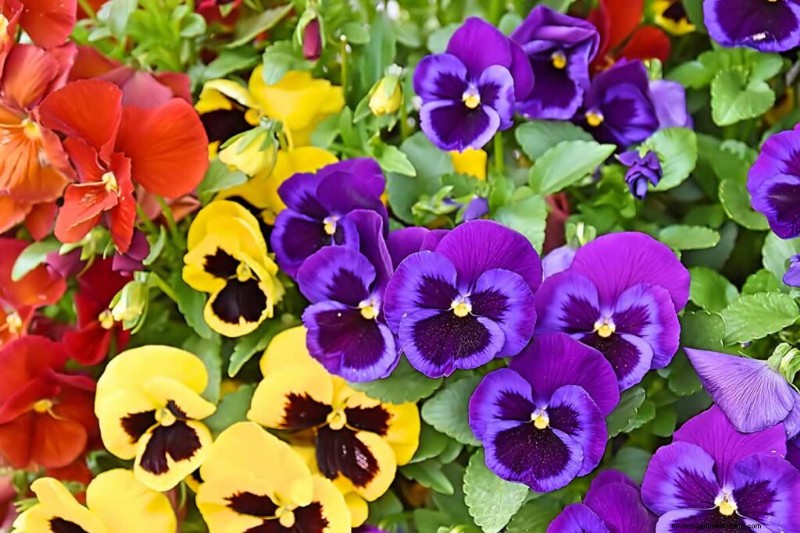
I think this is a shame, because they used to be much more flavorful than they are now.
Breeders have been focused on making prettier blossoms rather than tastier ones, but don’t let that stop you from
using them in your desserts or salads if more for the color than anything else.
Though it’s mostly concentrated in the edible leaves and stems, if you hunt down
Viola x
wittrockiana , this hybrid still has the wintergreen flavor that makes violas real winners as edible blossoms.
It comes from methyl salicylate in the plant. If you pull the petals and just use them, they’ll have more of a mild, grassy flavor.
You can learn how to grow pansies here .
51. Passionflower
Passionflowers (
Passiflora spp.) are so funky and alien-looking that you might be a little nervous to chomp down on one, but don’t be timid.
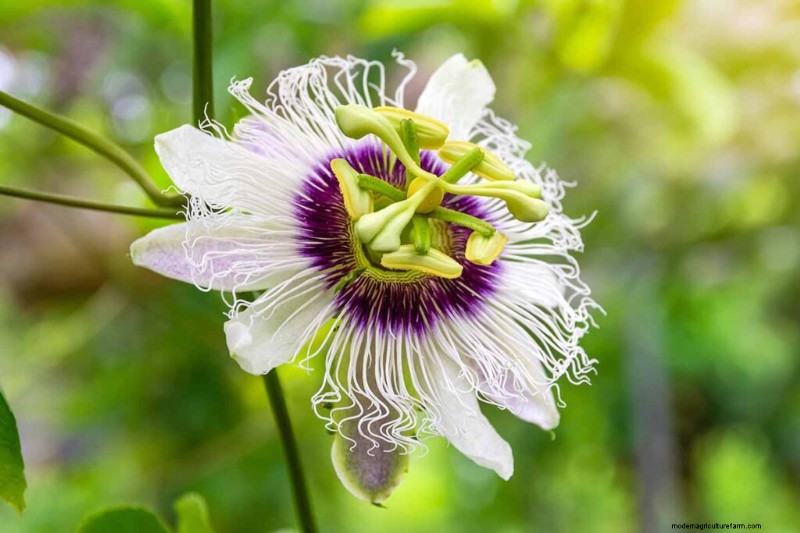
The petals have a tart, sweet flavor and are beloved in tea, both iced and hot.
You can also use the petals to make a cordial as described above for lilacs, or chop them to use on desserts.
Learn how to grow passionflower here .
52. Peas and Beans
Flowers from any type of
edible pea plant (
Pisum sativum ) can be consumed, as well as some types of ornamental peas like blue butterfly (
Clitoria ternatea ).
True pea flowers taste a lot like… wait for it… peas! Blue butterfly pea has a distinctly chamomile-like flavor.
Blue butterfly blossoms are intensely blue, but if you mix them with an acid like lemon or vinegar, they turn the solution purple. You can use it to color or add flavor to dishes or cocktails.
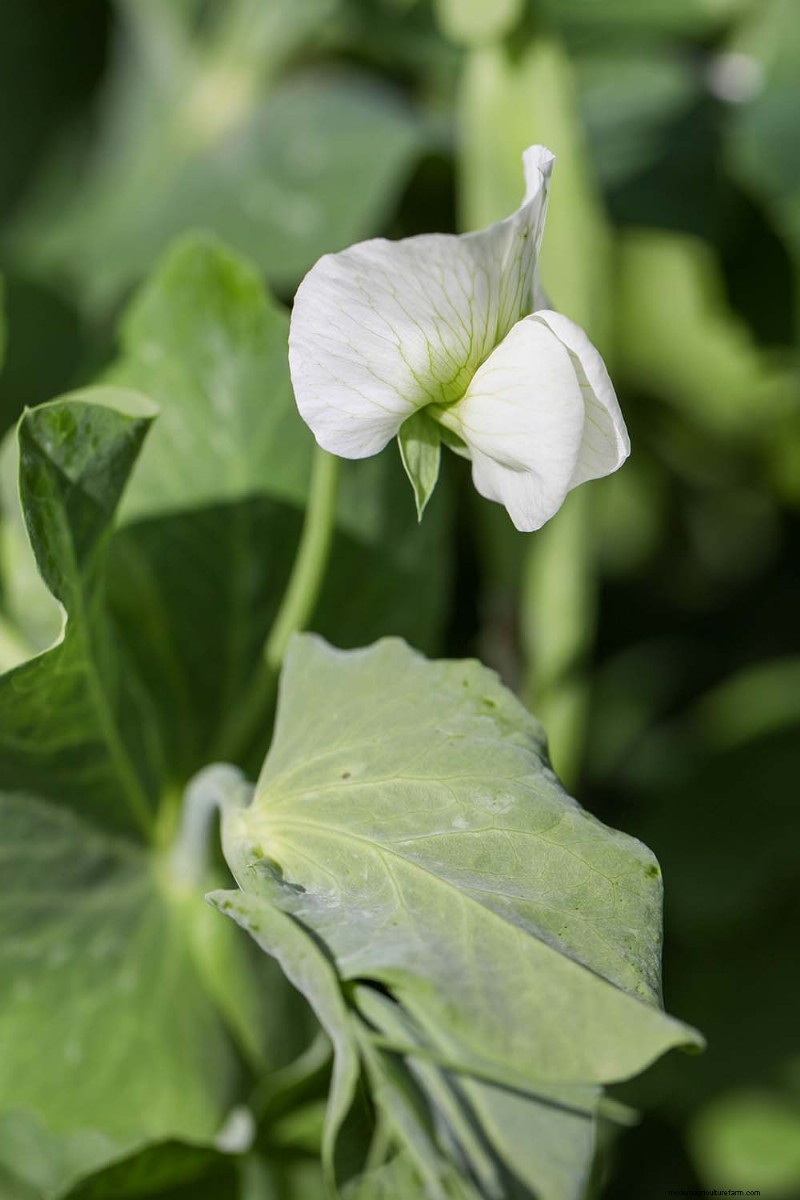
Photo by Kristine Lofgren.
Toss true pea blossoms into any dish that you’d use peas in, from stir-fries and soups to salads and sandwiches.
Similarly, bean and some other types of legume flowers from the
Phaseolus ,
Lens ,
Cicer , and
Glycine genera have a distinctly beany flavor.
I think Great Northern and
lima bean flowers are particularly delicious, and beans produce blooms in a variety of colors from white to pink to red to purple.
Don’t eat ornamental bean or pea flowers like
sweet peas (
Lathyrus odoratus ) – the blooms as well as the pods and seeds produced by these plants are poisonous.
Mung beans in the
Vigna genus should also be avoided.
53. Peony
If peonies (
Paeonia spp.) merely looked lovely, they’d still be well worth growing in the garden. But they also happen to be edible and they’re
delicious .
Depending on the variety, they may have a sweet, fruity, or slightly spicy flavor.
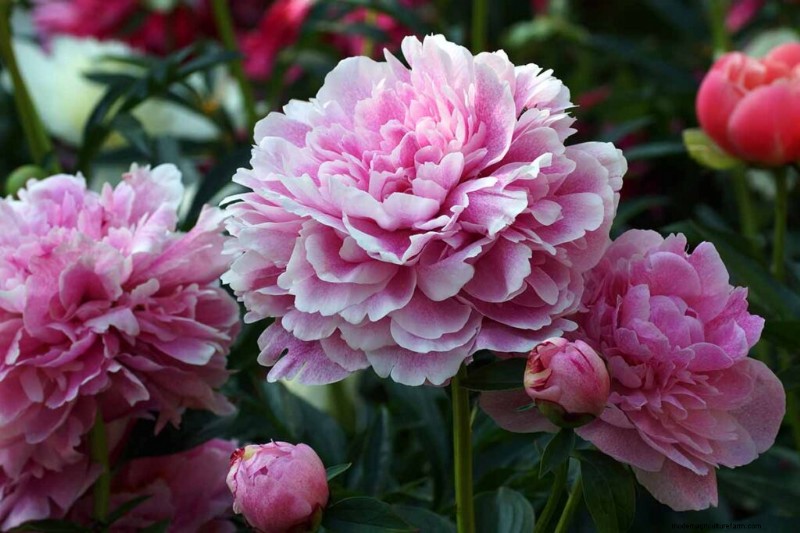
You can cook them, though they’re better blanched rather than thoroughly cooked, and they may also be consumed raw.
Sweeter types are best in desserts and cocktails, while spicier types are fantastic in salads and tossed as a garnish on soups.
Check out
our guide to learn how to grow peonies .
54. Phlox
Don’t confuse the edible variety here with
creeping phlox . Only the tall perennial species also known as
garden phlox or fall phlox (Phlox paniculata ) is edible.
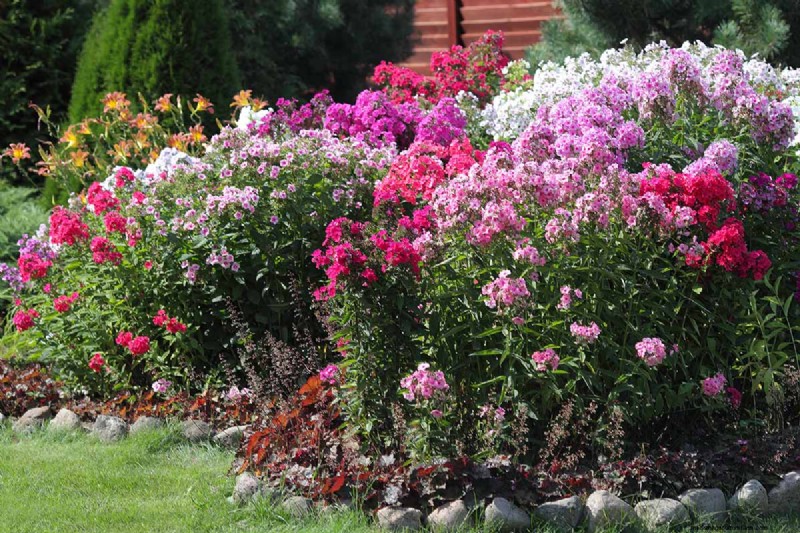
The flowers are sweet with a spicy bite and they are best used fresh in salads or on sandwiches.
55. Pommes and Stone Fruits
Crabapple and
apple (Malus spp.) ,
pear (Pyrus spp.) ,
peach ,
cherry , and
plum (Prunus spp.) , you name it. They’re all edible and most of their blooms taste great.
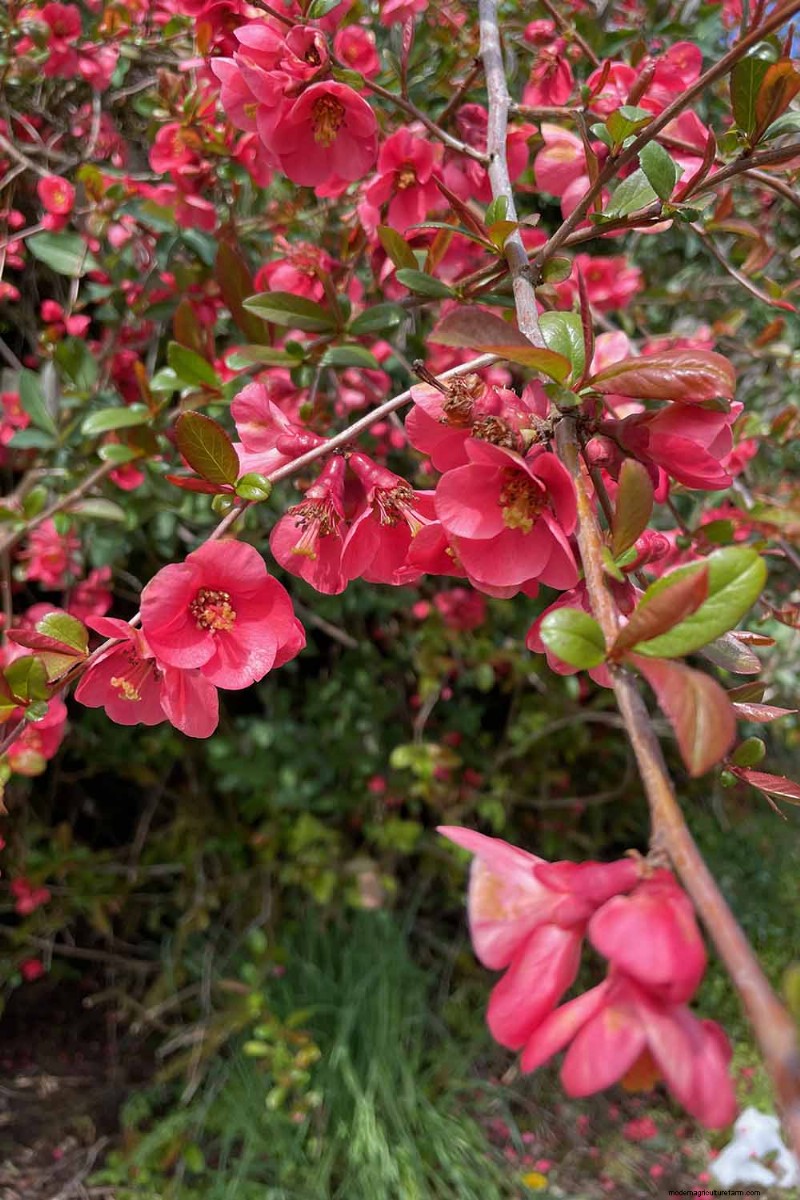
Photo by Kristine Lofgren.
Apples are the most cherished because they have the sweetest, most floral flavor, reminiscent of honeysuckle.
And quince (
Cydonia oblonga ) blossoms taste nothing like the cooked fruits you may have tried. They’re tart and astringent, like the raw fruits, but still delicious.
Reserve flowers from these types of fruit trees and shrubs for sweet dishes such as fruit salads, desserts, and candying.
Make sure to trim away any woody bits, the calyx, and the stamens. You only want to use the petals.
56. Primrose
Welcoming the spring with their cheery blossoms, primroses (
Primula vulgaris ) are famously fragrant and decorative, but it’s still kind of a secret that they’re also delicious.
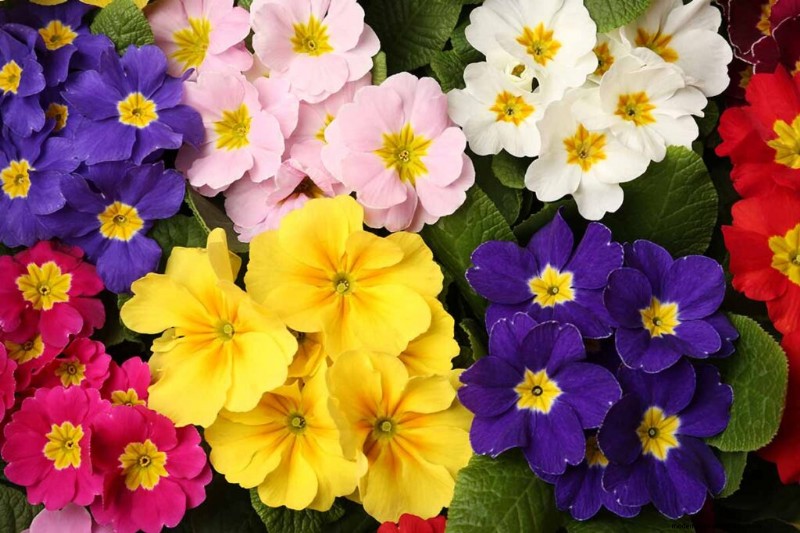
Some have a pleasantly mild flavor, similar to spinach. Others have a touch more bitterness and spice, sort of like
arugula .
They can be used either raw or cooked in savory and sweet recipes.
I think their pale yellow coloring makes them ideal as a salad or soup garnish or to top rice dishes. You’ll also see some varieties in white or pink.
57. Rose
The
hips are popular in cosmetics or for making tea and who hasn’t enjoyed catching a whiff of a rose-scented perfume, candle, or lotion?
We know roses (
Rosa spp.) are pretty and they
smell good , but we should really be chowing down on those petals more often. Depending on the type, they’re usually delicious!
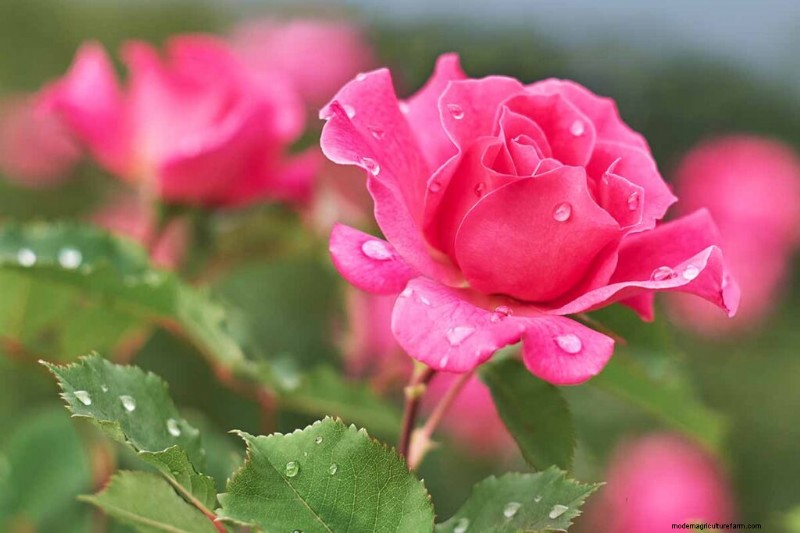
Rose water, rose syrup, and rose tea are pretty well-known options. But you can also make rose vinegar, compound butter, jellies, and jams.
Or toss the petals in cocktails, chicken or fish dishes, lamb curry, sandwiches, custards, cookies, cakes, and pies.
You can even pickle them with or without other veggies, and you can dry them to use like any other herb in your cooking.
Want to try a heavenly treat? Try the rosewater cardamom lassi recipe from
our sister site Foodal .
Before you start eating your way through the rose garden, give the rose you’ve set your eyes on a sniff.
If you don’t like the scent, you probably won’t like the flavor – our senses of smell and taste are totally intertwined.
This applies especially to musk-scented roses in particular. Some people just can’t stand them.
The more fragrant the rose, the stronger the flavor will be. Darker ones and older varieties tend to be more flavorful.
With the exception of
David Austin roses , newer creations like
Knock Outs and Drifts tend to have no flavor at all.
Wash the roses by rinsing them under a gentle stream of cool water or swishing them in a bowl of cool water, and then pull the petals off with your fingers, leaving the calyx behind.
Snip off the white heels and let the petals dry completely on a clean towel before use.
Learn more about growing roses here .
58. Rosemary
Rosemary (
Salvia rosmarinus ) flowers add a spicy, resinous flavor that is slightly more subtle than the leaves to dishes.
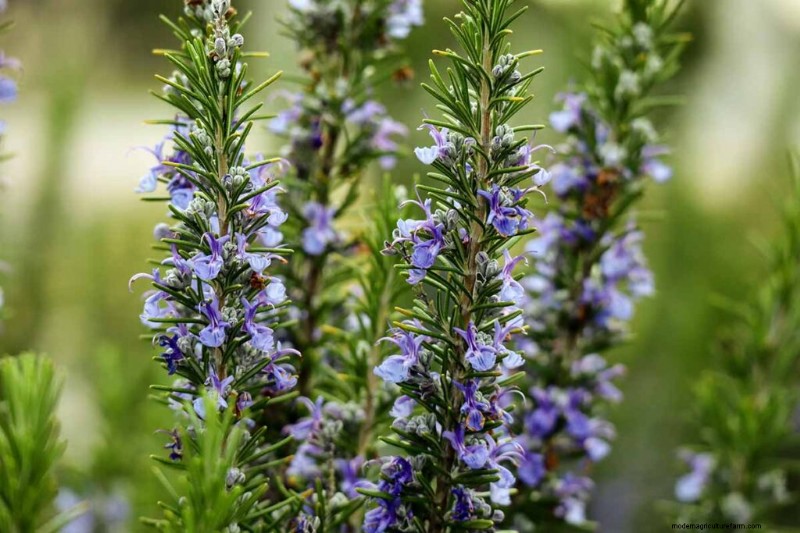
You can candy them for a pungently sweet bite or use them fresh anywhere you’d use rosemary.
In fact, I have friends that don’t like rosemary (I know, I’m not sure how we remain friends), but they love the flowers.
They‘re just mild and different enough that their taste might win some people over.
You can learn how to grow rosemary here .
59. Snapdragon
Yep, this adorable cottage garden favorite (
Antirrhinum spp.) is edible.
Snapdragons can be a touch bitter, but don’t let that turn you off. Radicchio is bitter and it’s a gourmet staple!
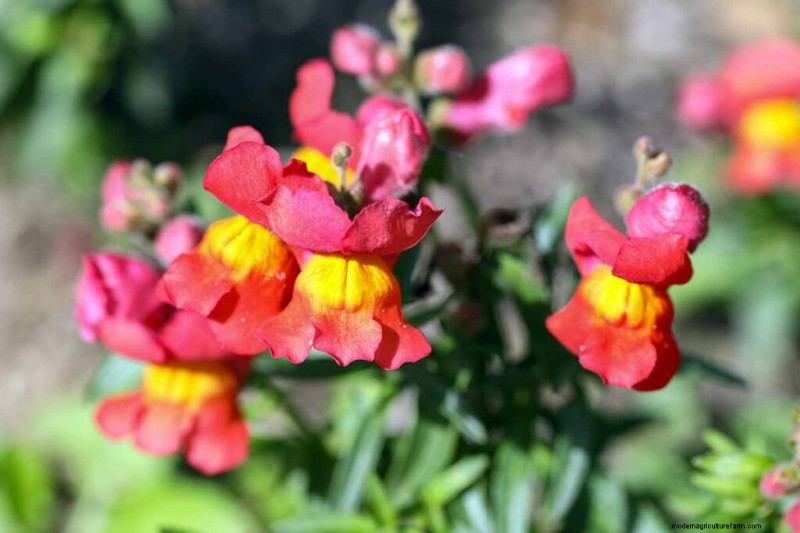
Photo by Kristine Lofgren.
If you haven’t checked out our
guide to snapdragon edibility, read it now .
And you will
find cultivation instructions here .
60. Squash and Other Cucurbits
Most of us have had stuffed squash blossoms before, or we’re at least familiar with them already.
You can also batter and fry them, add them to soup, salad, or egg dishes, or even use them to top chicken or pork.
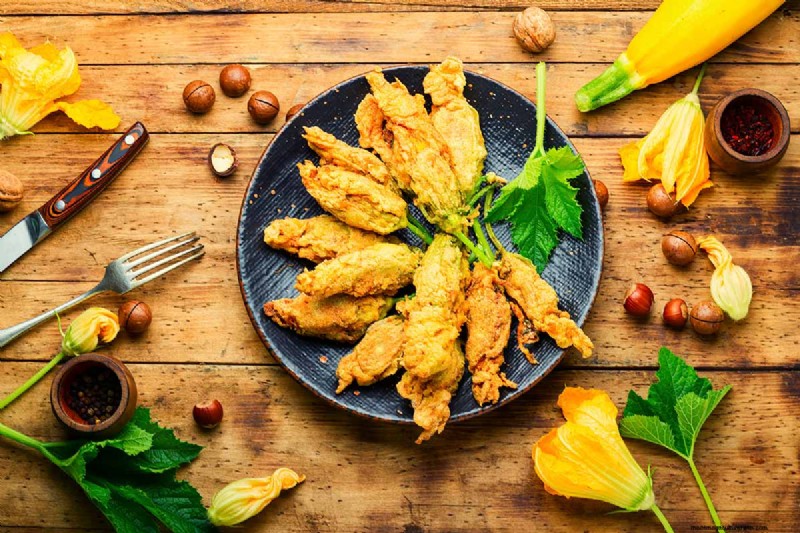
Many gardeners reference
squash blossoms specifically, but you can also eat the blooms of other types of Cucurbits like
cucumbers and melons, as well.
Zucchini blossoms are a classic choice for a reason, though – they are large and sturdy but not tough, with a mild floral zucchini flavor.
Melon flowers have a slight melon flavor, and
winter squash blossoms tend to be a bit nuttier, though they’re still mild.
It’s best to pick male flowers, because the female flowers are the ones that turn into fruits. Males have much shorter parts while the female has longer parts at the center.
The stem behind the male flower is straight and the female stem will be more bulbous, since it’s actually the part that will develop into the fruit after it’s pollinated.
61. Sunflower
Sure, you know that the seeds are tasty, but annual sunflowers (
Helianthus annuus ) are actually edible from root to tip.
You can harvest the petals for eating by plucking them away from the head.
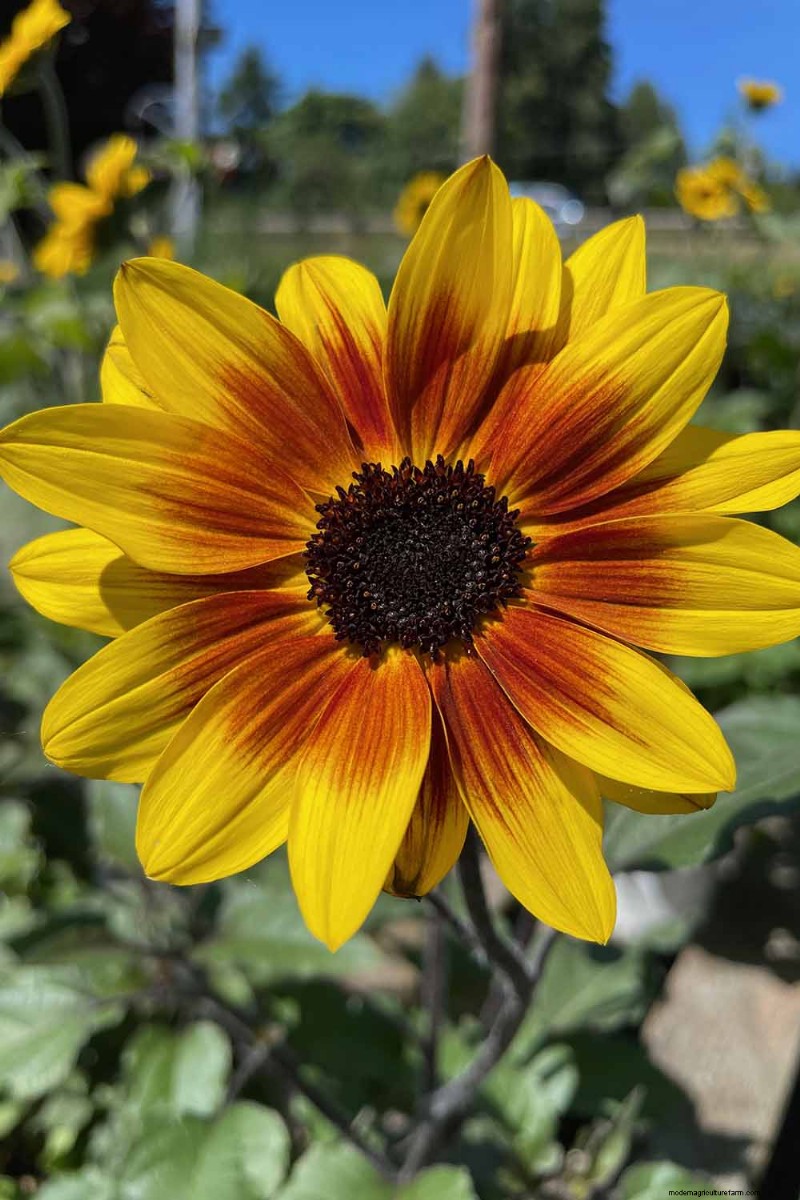
Photo by Kristine Lofgren.
The flowers have a nutty, floral flavor that fits right into pastas, salads, meat dishes, and soups. Whenever a recipe calls for sunflower oil, I add a few petals, just for fun.
Find out how to grow sunflowers here .
62. Sweet Alyssum
Lobularia maritima , commonly known as sweet alyssum, comes in clusters of white, yellow, pink, or purple four-petalled flowers.
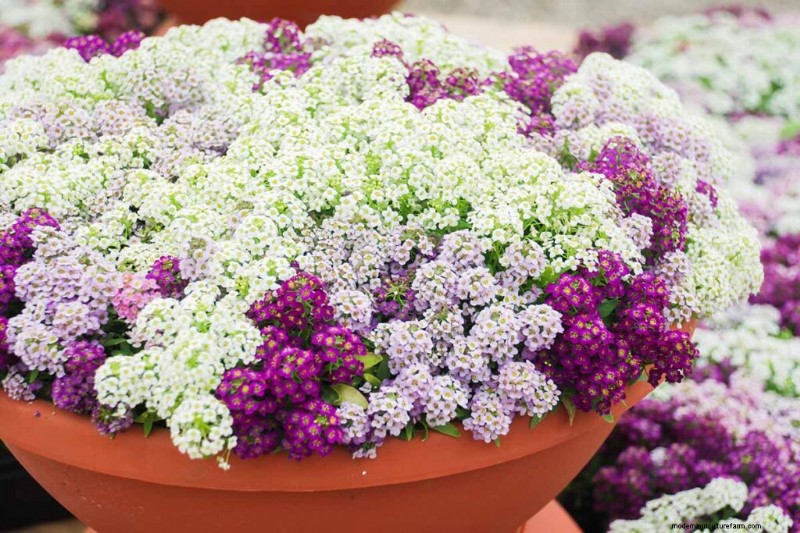
This lovely garden staple is a member of the Brassicaceae family, so it shouldn’t come as a surprise that it’s delicious. It has a sweet, peppery flavor.
In addition to making an excellent garnish, it can be used in soups, salads, and desserts.
This species is not to be confused with
mountain alyssum (
Alyssum montanum ), which is also technically edible but not tasty.
Learn how to grow sweet alyssum here .
63. Sweet William
Don’t ask me why you constantly see nasturtiums and violets being sold as edible flowers, but you rarely see
sweet williams (
Dianthus barbatus ) marketed this way in grocery stores.
Sure, you’re likely to come across bouquets of carnations to add to a vase, and these may be edible if they’re not treated with anything. But shoppers are really missing out!
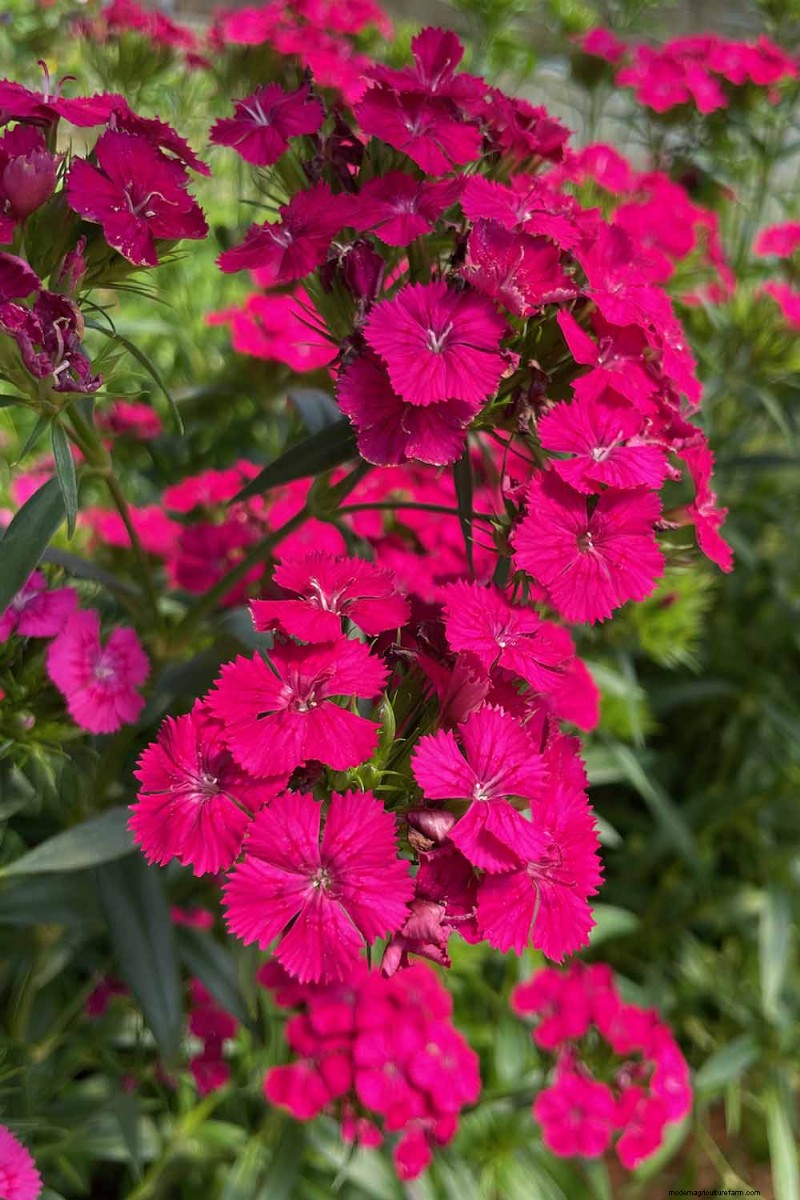
Photo by Kristine Lofgren.
Flowers from this genus are some of the tastiest out there. Maybe we need to start a campaign.
Sweet williams have a spicy, sweet flavor that works well in sweet and savory dishes of all kinds.
Candy them, toss them in salads, soups, and cocktails, or cover a cheese log with petals and serve it with crackers.
Check out our
guide to growing dianthus for more information about these flowers.
65. Tulip
Tulips (
Tulipa spp.) are underappreciated in the kitchen. Entendo. They’re so pretty that maybe some gardeners don’t even want to imagine eating them.
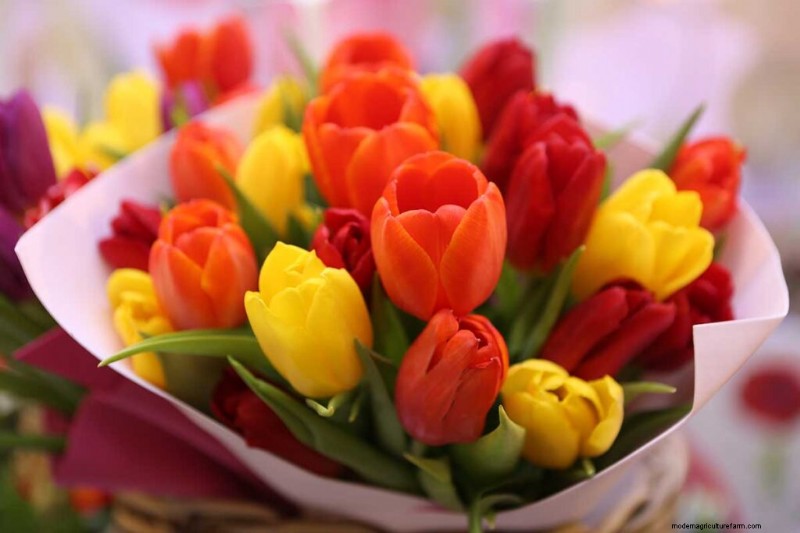
But they have a marvelous flavor that is a mix of asparagus and English peas.
Any culinary creation that could use a hint of those flavors – like egg dishes, salads, veggie dishes, or chicken salad – is fair game.
The petals of some varieties are quite firm, which makes them perfect as a potato chip alternative. Or stuff them as you would endive or lettuce leaves.
Learn how to grow tulips here .
66. Violet
Violets (
Viola spp.) are another one of those flowers that appears in every garden but rarely in any kitchen dishes.
Wild violets are tastier but these are generally going to be harder to get your hands on. If you’re up for some foraging and know of a good place to pick, have at it!
Whether cultivated or wild, don’t dry them or sit on them for too long after picking. These close relatives of pansies are best enjoyed fresh.
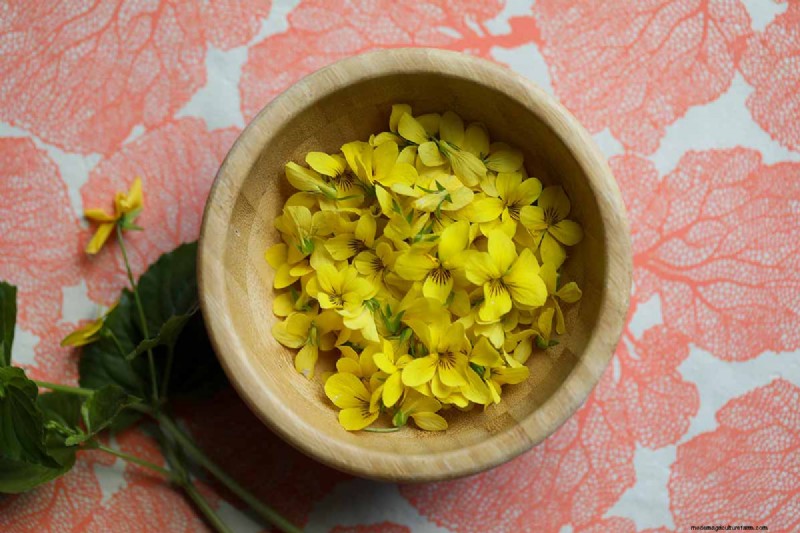
Photo by Kristine Lofgren.
If you can’t eat them right away, wrap the flowers in damp paper towels or float them in a bowl of cold water.
Some other types of flowers require prep in the form of removing the centers or bases first, but you can pop entire violets in your mouth straight off the plant.
These are a classic option for desserts, especially when they’re candied, with a distinct, perfumey flavor.
You often find them in ice cream, candies, marshmallows, cakes, and cookies. But they’re excellent in savory dishes, as well.
Use them in fish salad, chicken curry, egg dishes, and cheese souffle.
One of my favorite recipes for violets is from “The Forgotten Art of Flower Cookery.”
Author Leona Woodring Smith combines pineapple juice, tapioca, sugar, grated lemon peel, raspberries, oranges, orange liqueur, and fresh violets to make a soup. It’s phenomenal.
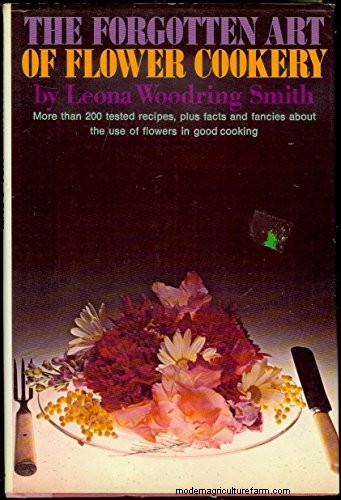 The Forgotten Art of Flower Cookery
 While the book is out of print, you can pick up a copy at used bookstores or
find it on Amazon . It’s a must-have if you want to expand your flower cookery repertoire.
Learn more about using edible violets in recipes .
64. Sweet Woodruff
I have a soft spot for sweet woodruff (
Galium odoratum ) because the shady areas of my dry Utah garden were extremely hard to fill with anything but hostas.
I love a good hosta, but sometimes you need something different.
I dug up a clump of sweet woodruff from my grandma’s yard and put it in my own soil. Within a few years, I had a beautiful green carpet of this wonderful herb.
One person’s (somewhat) invasive ground cover is another’s shady savior, right?
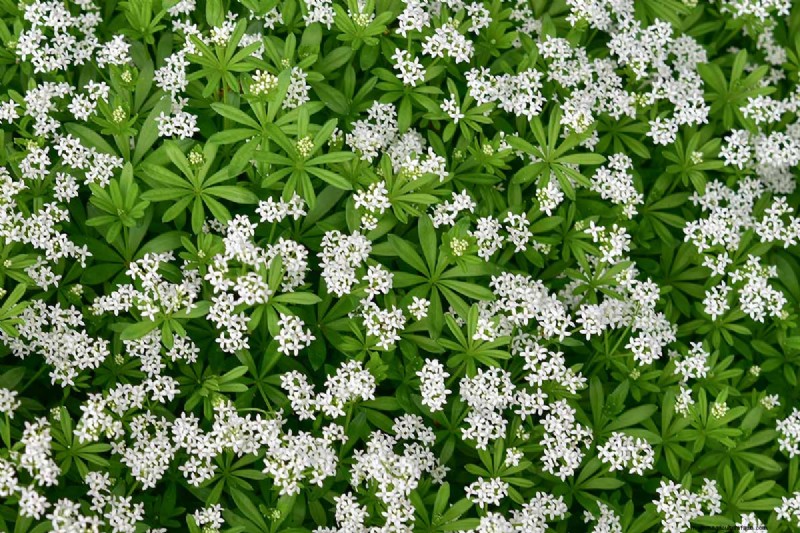
Sweet woodruff has a mild, hay-like flavor, and it can be a touch bitter. May wine is perhaps the most famous use of these flowers in the kitchen.
Years ago, the pleasant-smelling leaves, stems, and flowers were used as a mattress stuffing, which earned this plant the nickname sweet-scented bedstraw.
You can use the flowers to infuse tea or honey, sprinkle them on salads or sandwiches, or use them as a garnish.
Head to Foodal to learn more about using this plant in the kitchen and in your herbal medicine cabinet.
67. Yarrow
Whether
you’re growing it intentionally or it’s naturalized on the roadside, yarrow blossoms (
Achillea millefolium ) are well worth having around.
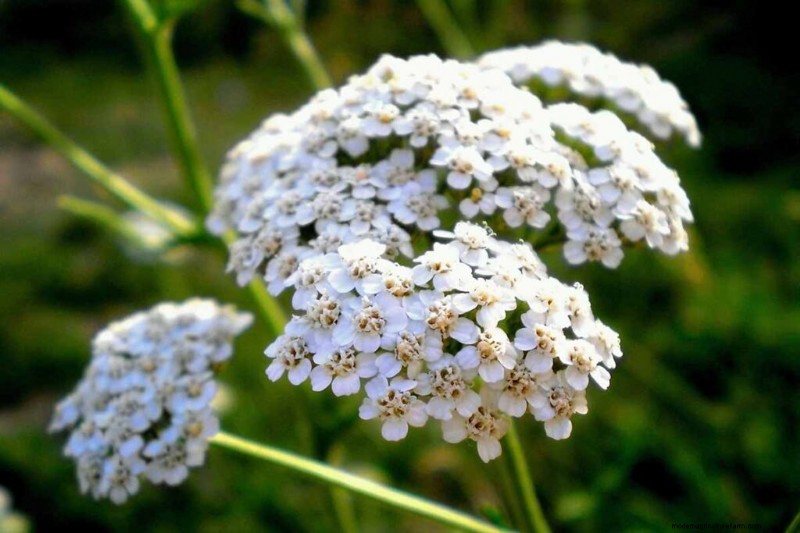
The flowers can be yellow, pink, or white in flat clusters that grow on stalks that can grow to be up to four feet tall.
The flavor is spicy and herbal, with notes of oregano combined with honeyed sweetness. Young blossoms are best as they turn bitter with age. And cooking amplifies the bitterness.
You can use dried yarrow flowers in tea and cocktails, or enjoy them fresh in pasta and rice dishes.
Some other
Achillea species are edible, but stick with common yarrow. It has the best flavor.
68. Yucca
Most people in the US haven’t yet caught on to how fantastic yucca flowers are as edibles, but Native Americans and Mexicans make good use of
Yucca bachata , and the blooms of all species in the genus are edible.
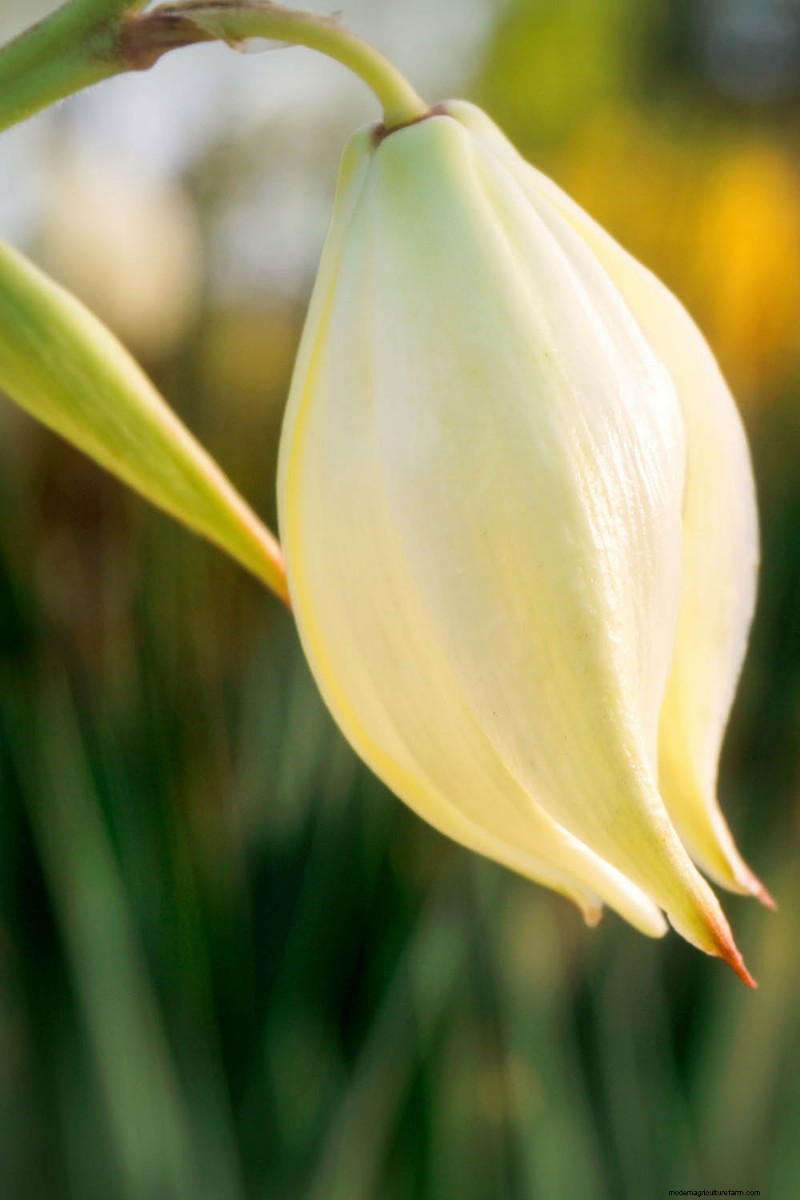
In Mexico, flor de izote (aka yucca flower) is used in steak, egg, and chicken dishes, whereas in El Salvador, it’s most popular in egg dishes, aka flor de izote con huevos.
The flowers are mildly sweet with an asparagus-like flavor. However, all other parts of the plant except the fruits of certain species are toxic, so use caution.
Our guide provides cultivation instructions .
69. Zinnia
A South American native,
Zinnia elegans or the common zinnia has bright orange, yellow, red, or magenta flowers with rows and rows of petals.
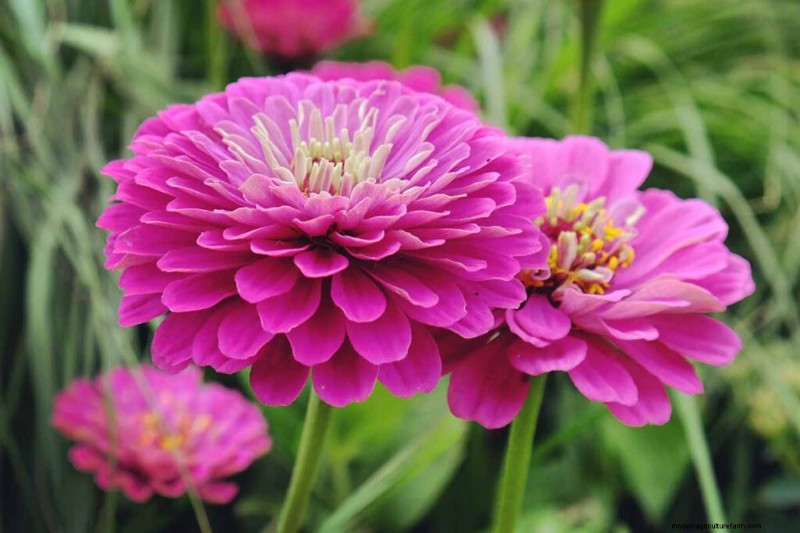
The flavor is slightly bitter, so use the petals sparingly or candy them to mask the bitterness.
Learn more about zinnias and how to grow them here .
A Feast for the Eyes and the Mouth
Most of us wish we had more space and time, which is why growing plants that can do double-duty in some way is so appealing.
But even if you aren’t growing any of these species already and you’re simply looking for a way to expand your cooking horizons, foraging for many of these is also possible.
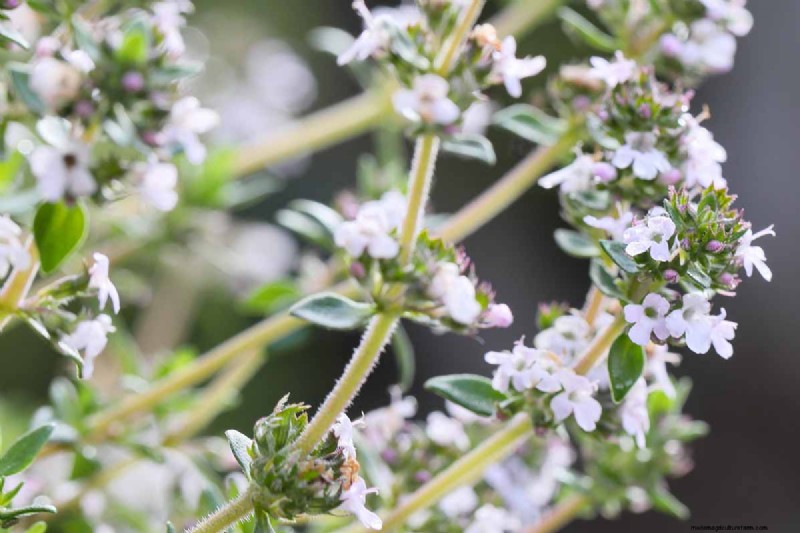
Photo by Kristine Lofgren.
Edible flowers are a feast for the eyes and the mouth. There’s something special about tucking into a dish of flowers that brings to mind lazy summer afternoons, or the optimism of spring.
But the species listed above aren’t just good as garnishes. Most are supremely flavorful in their own right, with many of them just waiting to be rediscovered as a worthy ingredient.
So tell us:what types of flowers are you going to dine on? Did we miss any that you particularly love? How do you use your edible flowers? Let us know in the comments.
And if you’re looking for
more information about growing flowers in your garden , check out these guides next:
- 21 of the Best Flowers for Mass Planting
- Birds, Bees, and Beauty:Tips for Growing a Native Wildflower Landscape at Home
- 15 of the Best Flowering Ground Covers to Meet Landscaping Challenges